Published on January 14, 2020, updated on August 8, 2026 with current prices and details.
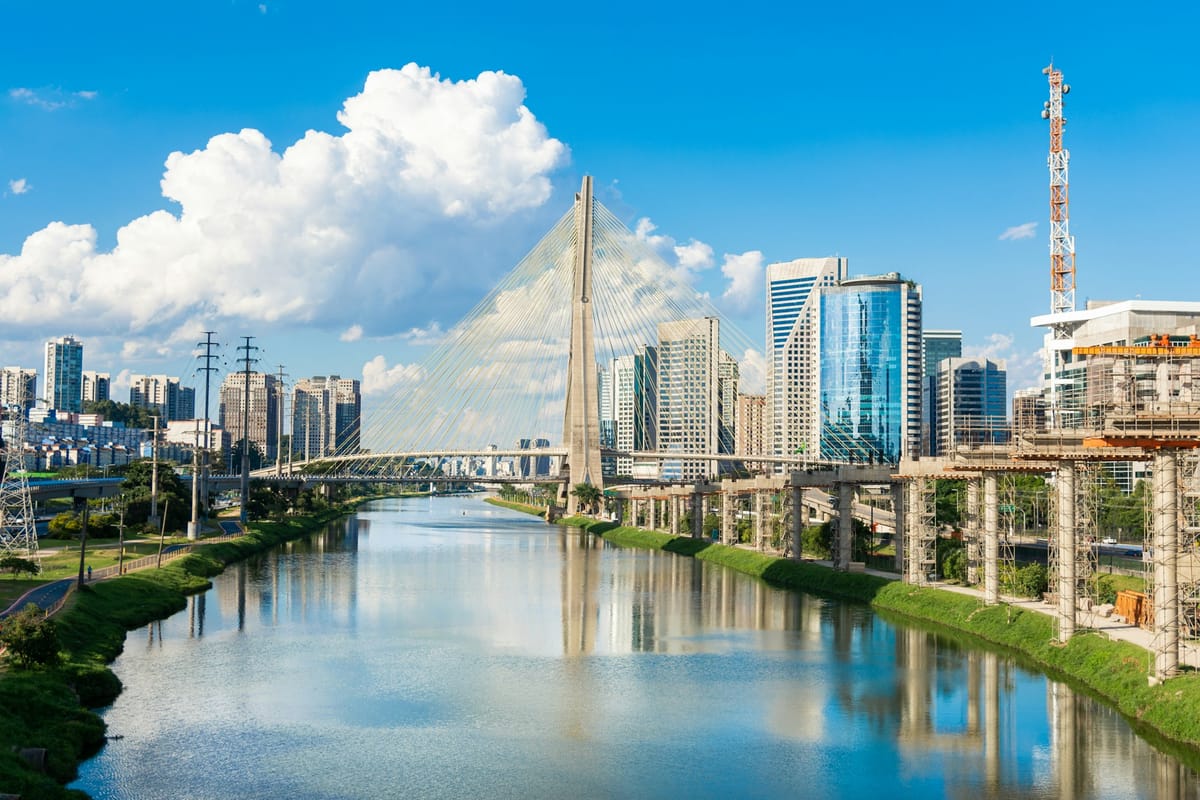
The biggest city in Brazil and the most populated on the American continent. Many travelers wonder whether it is even worth stopping in this city, which is one of the most important financial, business and industrial centers in Latin America. Well, that is exactly why we are here: to sort things out for you. We will cover the city's attractions in another article; here we will talk about how to get around, where to sleep, what to eat and other important tips.
Why Travel in Sao Paulo?
This is probably the biggest and most modern city you will visit on your trip, and it is your chance to feel a bit like you are in Tel Aviv while still being tourists. It is a crazy, colorful city, not a city of beaches or a place for treks, but of giant buildings and masses of people. Traveling here will remind you of real life and make you appreciate even more the special and challenging trip you are on.
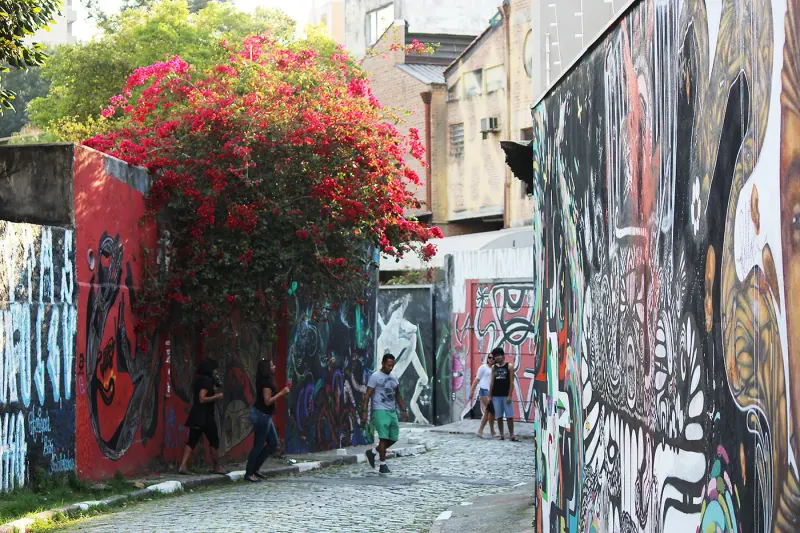
In Sao Paulo you can and should wander around the city and see the contrast between old and new, poverty versus wealth, the tall modern buildings versus the slums and the dirt. The business people and the bohemians versus the homeless and the beggars. Stroll among the tropical parks that sit between the bustling streets and feel the experience of this amazing city.
In short, dear travelers, do not miss the opportunity if you are landing here anyway, because Sao Paulo is the New York of South America. To whet your appetite, there is a short video in English about Sao Paulo.
Transport from the International Airport (Guarulhos)
Uber: for those in a hurry with money to spend, Uber or a taxi (more expensive) are the best way out of the airport. Guarulhos sits a long way from the centre, so this is not a cheap ride: to the Paulista area expect something in the region of R$100 to R$180, more during rush hour, 8 to 10 in the morning and 17 to 19 in the evening, and more when it rains. The app is the only quote that means anything, so open it before you commit. Split between 3 or 4 people it stops hurting. You will find your Uber at terminals 2 and 3 at the arrivals exit. You can also book a private driver with an air-conditioned car in advance for the service and the experience, and that is worth arranging before you fly rather than at the counter.
Train: the most cost-effective option for those who are not in a hurry and want to save (even though it is a bit more complicated). To change lines you will need to walk, and that sometimes takes time, but it is worth the experience. The airport line, Linha 13-Jade, opened back in 2018 and by now it is a normal part of the network: it saves time for anyone traveling from the airport to the city and back, and it connects to the rest of the metro and train lines. There is also a direct Expresso Aeroporto service that runs between the airport and Palmeiras-Barra Funda, stopping only at Luz, Bras and Guarulhos-Cecap, in a little over half an hour. Travel time to the city center on the regular trains is about an hour (which sometimes is just like going by car).
On some of the trains, even though they are good and comfortable, there are no announcements in English. The new trains do have them, so it is easier to follow the stations where you need to get off. There is line signage everywhere; follow it so you do not get held up.
At the airport there is a free shuttle bus that runs every quarter of an hour between the three terminals and the train station. Using the train you can reach the metro stations Luz, Bras and Eng. Goulart and from there continue to all parts of the city. Check the train timetable online before you set out. The metro itself runs from 04:40 in the morning until midnight, and on Saturday nights the main lines have been staying open right through until Sunday morning. The crazy rush hours are between 6 and 8 in the morning and 17 and 19 at night.
The Sao Paulo metro at rush hour.
About money: there is no longer much reason to arrive loaded with cash. Cards are accepted almost everywhere in Sao Paulo, down to a coffee and a pastry, and Pix has taken over the rest. Change or withdraw a small amount at the airport, enough for a snack and a bus, and take the rest from an ATM in the city where the rates are better. Airport exchange desks are the worst deal you will get all trip.
Important tip: domestic flights within Brazil usually leave from the local airport (Congonhas) and not from the international one. So pay attention, so you do not arrive at the airport and discover you need to move to another one. Rides to the local airport are cheaper, but prices vary depending on the day and the traffic. Online you can check landing and takeoff times at Guarulhos airport and find information in English on ways out of the airport.
Places to Stay
In our opinion the best thing to do is rent an Airbnb. Easy, simple and safe, and above all it will help you experience the city in a more authentic way by staying with locals. It is highly advisable to find a place in the city center, Paulista, Jardins, Vila Madalena, and not to go for the cheaper price, which is usually in the less interesting neighborhoods. It is better to make sure the hosts speak English, since it will be easier to communicate with them. Nightly prices move constantly with the neighbourhood, the season, weekends, holidays and whatever conference is in town that week, so compare a few dates before you book instead of trusting any single number.
Of course the city also has excellent, modern hostels and guesthouses. There are cheaper and more expensive ones; it depends on you and how much you want to pay for accommodation. There are even small, nice hotels where it is sometimes worth staying and pampering yourself, and the price is about the same per person. As a rough anchor for 2026, a bed in a shared dorm in a decent central hostel starts somewhere around R$45 to R$70 a night, and a private double costs a good deal more than that, very much depending on location and quality. Almost all of them include free breakfast.
Important tip: book a room in advance (even an hour before) and do not arrive at a hostel without a reservation. Even though there are thousands of places to stay, sometimes they are full and it is a shame to waste the trip.
Getting Around the City During the Day
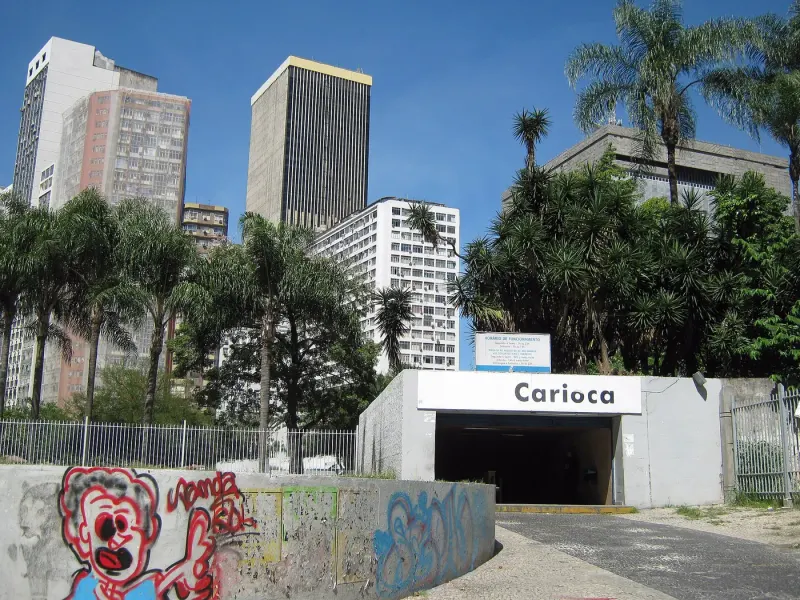
If you are staying in the center (Paulista, Jardins, Vila Madalena or even Pinheiros), you can get around on foot or on the excellent and safe metro. The metro in Sao Paulo is amazing and sometimes also very crowded. If you are a bit far from the center you can use the metro as well; after all, it is part of the experience.
A single metro or train ticket (Bilhete) costs R$5.40 as of January 2026. Fares here are adjusted at the start of most years, so treat that as this year's number rather than a permanent one. Important tip: you no longer have to queue at all. Every metro station now has gates that take a contactless credit or debit card, and your phone or watch works too. If you prefer paper, buy several rides at once so you are not standing in line on the way back.
There are several metro stations located on the main lines (which you will surely get to know if you use the metro), for example Av. Paulista and Consolacao Brigadeiro, and also several stations whose exit leads straight into a mall, such as Santa Cruz Tucuruvi, or into markets, such as Sao Bento. Online you can find a map of the Sao Paulo metro lines.
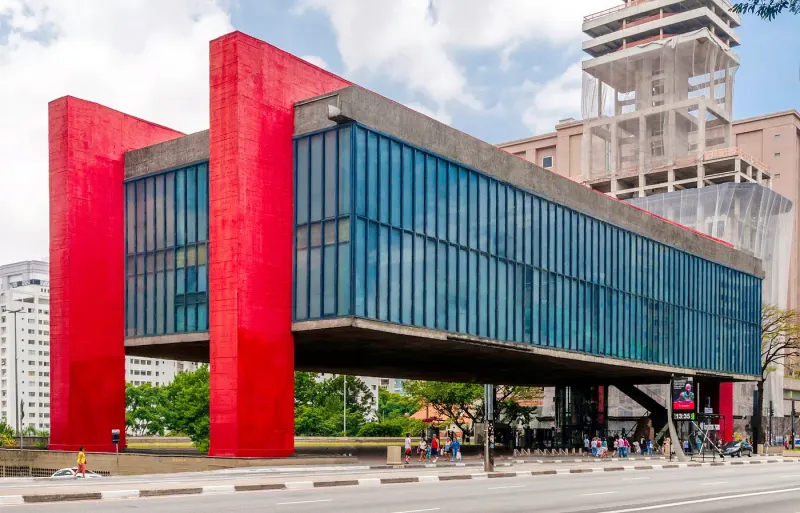
Avenida Paulista, the most famous avenue in Sao Paulo.
Walking the City Streets
In principle it is very safe and really not as dangerous as people think. Quite the opposite, actually. But you need to be careful and pay attention: it is a good idea to wear your bag in front, be alert when standing close to people on the metro, and not count money in front of people on the street.
In general, people are polite and courteous, but almost no one speaks English and they will not understand what you are trying to say. Not in shops, not in restaurants, not on the train. In short, it is a problem if you do not have a guide or someone who speaks Portuguese.
Our recommendation: learn a few basic words and sentences in Portuguese. It will help you enormously to communicate much more easily during your stay in the city and in Brazil in general. There is also a video guide in English.
Weather
How do you say it? Crazy. It is almost impossible to know what the weather will be. The day can start warm and clear and later turn rainy and cool. In short, like all four seasons in a single day. On the climatempo website you can see the forecast and know what to expect, or even check your phone and see what is planned for the day. As a rule of thumb: the Brazilian summer, roughly December to March, is hot during the day with heavy downpours in the late afternoon, and the winter months around June and July are drier and genuinely cool at night, cool enough that you will want a jacket. Sao Paulo sits high up on a plateau, so it is never as hot here as it is in Rio.
Food and Daily Expenses
Everything from everything, including everything. Everywhere there are restaurants and food stands (quiosque), some open 24 hours (only in the center). All the types and flavors you could want. The locals go out for lunch between 12 and 14, so there are longer lines to pay.
There are lots of restaurants where you pay by weight, meaning there is a price per kilo (Per Kilo) and you pay according to the amount you took. In early 2026 the city's consumer watchdog put the average per-kilo price in Sao Paulo at just under R$90 a kilo, which sounds alarming until you remember that a normal plate weighs 400 to 500 grams, so lunch works out at roughly R$35 to R$45 depending on how hungry you are. Sometimes after 15:00 the restaurant lowers the price (to sell more so no food is left over). Important tip: note that only in a few restaurants is the price fixed for all-you-can-eat, and where it is, the same survey put the average fixed price at around R$60.
There are lots of simple, popular restaurants that sell a ready plate (Prato feito) of rice and beans (arroz com Feijao) and a portion of meat (Carne) of your choice for lunch (Almoco). It is quick and nutritious, and in early 2026 the average prato feito in Sao Paulo came in a little under R$40, cheaper in the north of the city and dearer in the west. Everywhere you will also find small pastries stuffed with a variety of cheese and meat fillings. A pastry (lanche) costs a few R$ apiece, is served warm, and you can take it to go.
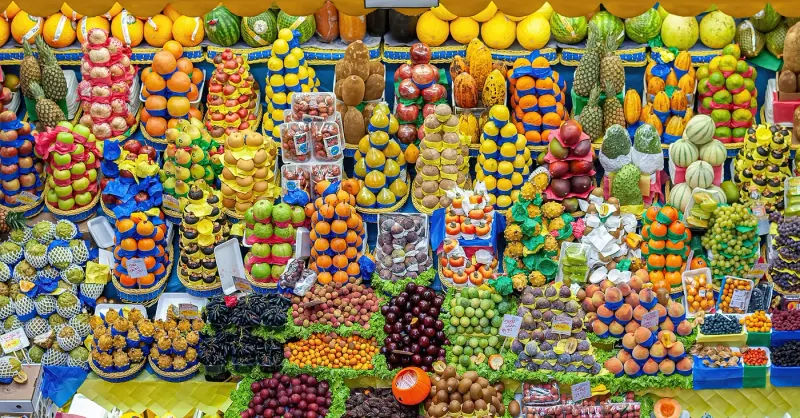
Of course here too there is acai on every corner, which is absolutely the national dish of Brazil. Prices swing a lot by neighbourhood: in 2026 a 500 gram cup runs from around R$18 in the working-class parts of the city to R$28 or more in Jardins and Vila Olimpia, and the toppings are where it really adds up. Brazilians have cheese bread (pao de queijo) as their national snack: small, tasty baked balls with cheese inside, for snacking on the way from here to there or to quiet a small hunger. Highly recommended to try. There are also pasteis (Pastel) in every flavor, a fried pastry made fresh on the spot. For more details on Brazilian dishes, check out our article, a guide to local food in Brazil.
The city of course also has expensive and even very expensive restaurants everywhere, in the center and all over the city. A proper sit-down meal in a good place starts around R$60 a head and climbs from there without any upper limit, especially in Jardins and Vila Olimpia. Pizzerias and Asian food dominate the city, for anyone feeling homesick, and obviously there are McDonald's and Burger King.
Important tip: service in restaurants is usually slow and it is hard to communicate with the locals to understand the menu or complain about the price. There is nothing to be done; just be patient and enjoy. Our recommendation: download the Portuguese language in Google Translate so it works offline.
Daily expenses depend very, very much on you. There is everything from everything. Eat at the per-kilo places, use the metro and you will get through a day on very little. Eat in restaurants, take Ubers everywhere and go out at night and you can multiply that many times over without trying. Sao Paulo is not cheap, just like Tel Aviv, but there are also plenty of genuinely cheap and very good options for getting by in the city.
What to Do at Night
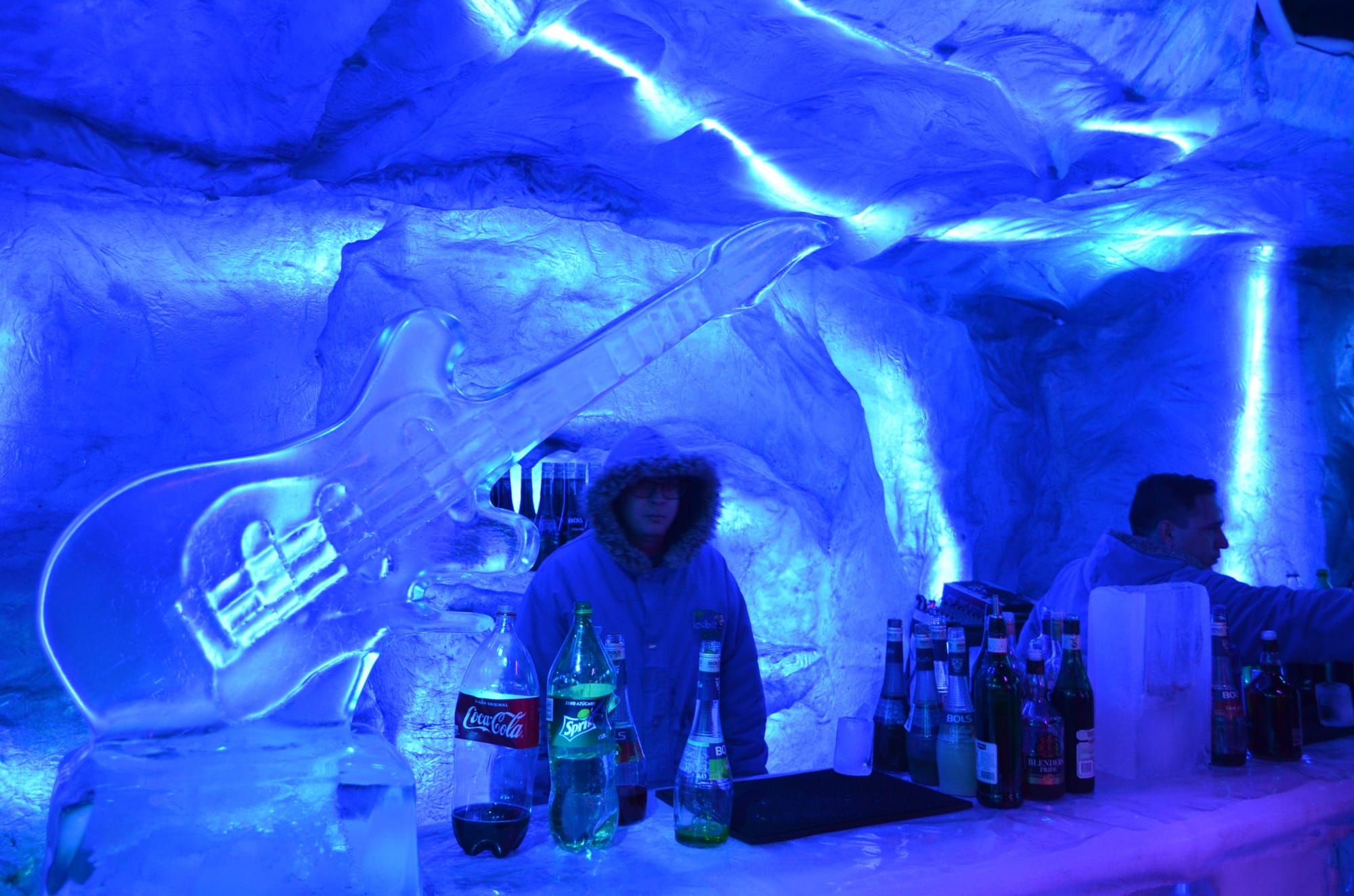
Whatever you want. Relaxed or wild, together or apart. Almost everything closes at 22:00 at night, but in the city center, in areas like Paulista, Jardins and Augusta, there are places open almost all night. Mostly nice local bars where you can sit and pass a few hours with a cheap local beer or a caipirinha (Caipirinha) in a cool urban atmosphere. On weekends the nightlife is wild.
The main street, Paulista, changes direction from work to leisure and fills with people, mostly young, who wander around having fun or sit in a local bar to talk and hang out. Nearby Augusta street and its surroundings are full of young people of all kinds who go out to the more modern bars and restaurants.
You can go out to a bar playing local music or live performances. Weekends are full of parties in clubs and bars, just like in Tel Aviv, only with a Brazilian vibe. There is usually a cover charge at the door, and how much depends entirely on the venue, the night and who is playing, with the bigger clubs and the live acts charging several times what a neighbourhood bar does. On top of that you pay for drinks. Again, prices can be as expensive as in Israel.
Important tip: bring an ID, passport or license to get into bars and clubs in the city, dress nicely and no flip flops (no entry to clubs with flip flops!!! They will simply leave you outside).
Hostels and Guesthouses
In most hostels there is someone who speaks English, which helps a lot when you need assistance or want to ask a question. At night there is usually an open bar, or you can sit and enjoy time with the other tourists or locals and make more friends for the trip, or simply stay connected to your phone or computer and spend a calm, quiet evening.
Recommended hostels and guesthouses near Avenida Paulista and Jardins: Lobo Urban Stay, address Haddock Lobo 893. Bee W Hostel, address Haddock Lobo 167. Soul Hostel, address Sao Carlos do Pinhal 461. The Hostel Paulista, address Maestro Cardim 1260.
In the Vila Madalena neighborhood: Sampa Hostel, address Girassol 519. Cafe Hostel, address Agisse 152. Namoa Hostel, address Paulistana 708.
For those who really want to pamper themselves in the big city, mainly in the tourist center there are lots of small, high-quality apartment hotels that will make you feel beautiful and chic, and sometimes the price of a double room is almost the same as a hostel room shared with other people. The big plus is that there is usually a pool on the top floor, and you really can feel like you are on vacation in the big city. Apartment hotels near or on Avenida Paulista: Ibis Budget Paulista, Ibis Budget Jardins, WZ Jardins, London Class Suites, Hampton Park.
The author of this article, Gil Savransky, is our man in Sao Paulo. He will show you the city the way only locals can and give you a small vacation within the big trip.
One last word on all the numbers in this article. Brazilian prices move fast, transport fares are adjusted almost every January, and hostel and restaurant prices follow. Everything here was checked in 2026, but treat it as a sense of scale rather than a price list. If you want to know what something costs this week, write to us on WhatsApp at +55 21 98689-5321 and we will find out for you.
Rio Trip is an Israeli tour agency in Rio de Janeiro, with more than 23 years in tourism, guiding travelers in Rio. We run day trips in the city and the surrounding area and also organize tours for private groups according to the client's requests. We would be happy to help you plan your trip in Rio de Janeiro and Brazil.