Published on March 11, 2020, updated on August 8, 2026 with current prices and details.
If you are planning a vacation in Brazil or coming to Rio de Janeiro for a few days, in this article we present a plan for three independent days of touring some of the main tourist attractions in Rio, traveling from site to site by Uber or bike, calmly and without stress and running around. We will also add tips and inside information from someone who lives here.
Known all over the world for its natural beauty, Rio de Janeiro holds hundreds of sites that can easily fill your trip. But no matter where and how much you have traveled in the world, in Rio you will find several attractions you cannot find anywhere else, and a trip to Rio is not complete without them. So if you are coming to Rio, try to check off at least some of them.
We will just say that our day trip, Rio Trip, reaches some of the places on the list (the Christ statue, a favela tour, the colorful steps) and can also save you time and money. We also guide private day trips with an air conditioned vehicle. That is it for the ads, let's go.
One word about money before we set off. Ticket prices at Rio's big sites are reset every year, and most of them now charge a visitor from abroad more than someone who can prove they live in Brazil, so treat every number in this article as an up to date ballpark rather than a fixed tariff. Wherever a site sells online, its own website shows the real price for the date you choose, and that is the number to trust. If you want us to check something for you before you book, or you would rather we simply took care of it, message us on WhatsApp at +55 21 98689-5321.
Day One: A Dip in the Cold Water at Copacabana or Ipanema Beach
Assuming you are staying in Copacabana or Ipanema, I recommend getting up early in the morning (what is early? 8 am or before) and simply walking to the sea to check off the first item!
Rio is blessed with dozens of kilometers of beaches. Most of Rio de Janeiro's beaches are in the southern part of the city and they are no less beautiful! But the names Copacabana and Ipanema Beach are famous all over the world, and there is no trip to Rio without visiting them. The water at Rio's beaches is cool to very cold (depending on the season) because of a cold sea current. As Israelis used to the warm Mediterranean, it is hard for us to get used to this water, but the cold passes after a few minutes. In the morning the beaches are still half empty, the weather is pleasant and not too hot, and the water is calmer. You can rent a stand-up paddle, paddle away from the beach and view Rio from a different angle, walk along the beach, or rent a chair and sit facing the sea drinking coconut water. None of that has a fixed price list: a stand-up paddle is usually around R$50 for an hour and less for half an hour, a chair tends to run from about R$10 up to about R$25 for the day, and a coconut water sits somewhere in the R$8 to R$15 band, all of it depending on the beach, the season and the day of the week. Agree the number with the vendor before he plants anything in the sand. At these hours, the few people you will see on the beach are exercisers of all kinds and saltwater swimmers coming to the beach before a work day.
Tip: if you managed to get up early in the morning, I recommend visiting the southern side of Copacabana beach (the part attached to Ipanema, near the Copacabana Fort). The water in this part is calmer and there is stand-up paddle rental. This is where the fishermen concentrate and there is a small market if you feel like buying fresh fish. In Ipanema I recommend the northern part of the beach near Arpoador rock. This is the only part of the beaches that does not border a road, so it is quieter. Here too the water is calmer and there is stand-up paddle rental. Also, within walking distance between southern Copacabana and northern Ipanema (next to the bike path) you can find a branch of Megamatte, where you can have acai for breakfast (or any time), cheese bread (Pao de queijo), mate and other tasty things.
Go back to the hotel to shower and/or have breakfast. Pull out your phone and call an Uber. It is time to visit Christ.

Going Up to the Christ Statue
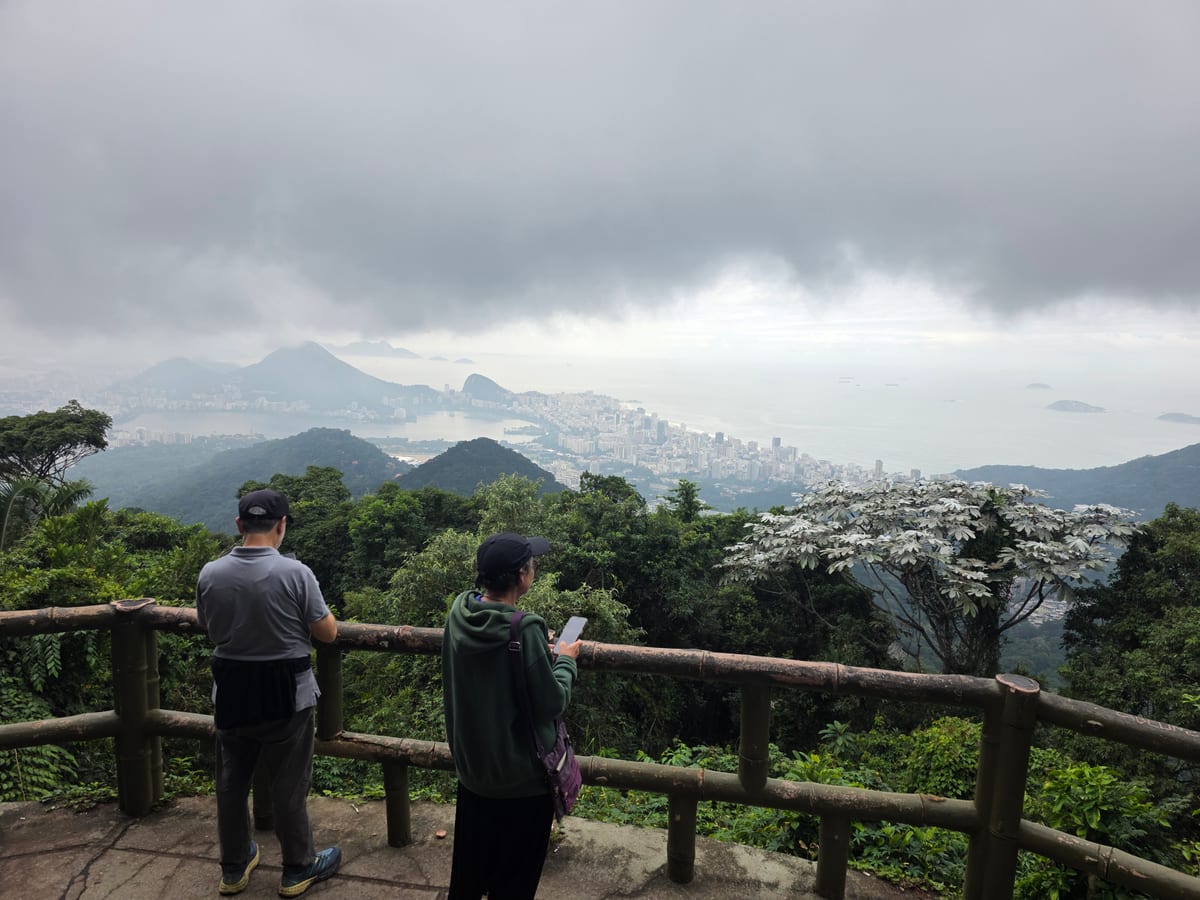
The statue of Christ the Redeemer, Corcovado, is one of the crown jewels of the city, one you really must not miss. The statue stands on one of the highest peaks of Tijuca park. It overlooks the whole city and you can see it from almost anywhere in Rio de Janeiro. The statue itself is impressive, but in my opinion the breathtaking view is the real attraction. From here you can see the whole city, the beaches, the lagoon, Sugarloaf Mountain, the Maracana stadium and almost all the city's neighborhoods.
Ways to reach the Christ statue:
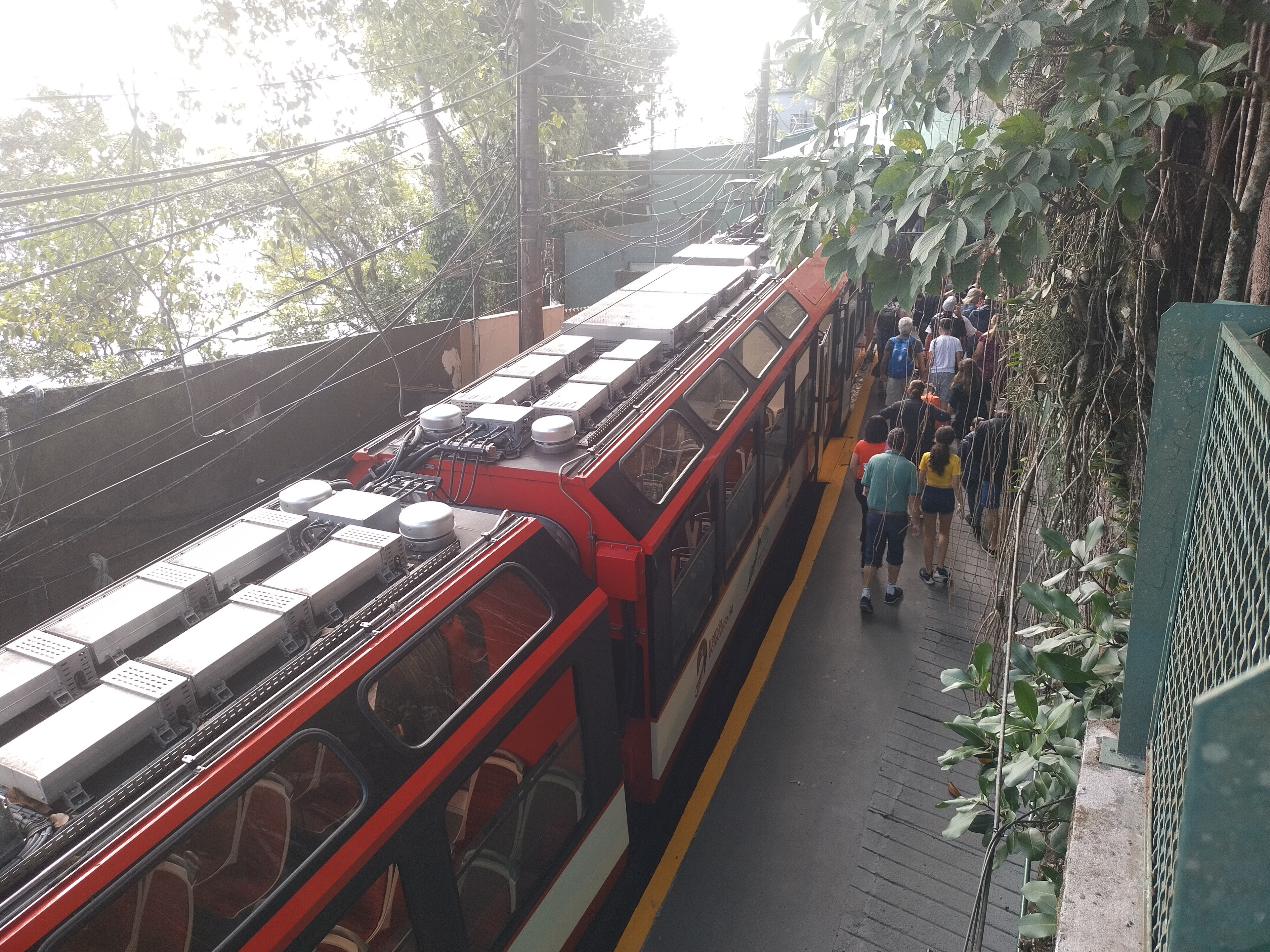
Train: it is strongly recommended to buy tickets at least a day before on the train website, and in high season several days before. On the site itself, choose English and then Buy your ticket. You will reach a registration page. From the list of countries choose Outro and continue registering in English. The registration is a bit long but worth it if you do not want to get stuck without tickets. The ticket covers the round trip on the train and entry to the monument together. An adult ticket sits in the R$130 to R$145 band, with a lower price for children aged 7 to 11, students and holders of the ID Jovem card, and a cheaper senior rate for Brazilians over 60. The exact number moves with the date, and the site shows it before you pay.
The train leaves from the Cosme Velho neighborhood. If you are coming by Uber, and from Copacabana or Ipanema this is one of the shorter and cheaper rides you will take in Rio, simply type Trem do Corcovado in the app's search bar. Your driver will stop in front of the station. As you get out of the Uber, all sorts of vendors will jump at you trying to sell you the ride up to Christ in a van. Simply enter the ticket office area, where an English speaker will guide you.
The train takes you right into the site without waiting in another line. The ride up and down is an experience in itself, since the route passes through the Tijuca forest.
Tip: if it is cloudy on the day you want to go up to Christ, postpone the visit to another day if possible. When it is cloudy the mountain is full of fog and you cannot see the statue or the view.
Opening hours: the train runs between 8:00 and 19:00, and 19:00 is the last train back down.
Uber: an Uber can take you up to the Paineiras visitor center partway up the mountain. From there you continue to the statue in an official van, and you buy the van and the entrance together at that point. If you decided to come by Uber, type Paineiras Corcovado in the search bar. Price: besides the Uber, the van plus entrance from Paineiras is R$84 full price and R$58 for the reduced categories. The visitor center works from 7:30 to 18:00, with last entry at 17:00.
Tip: if you have already decided to go up by car, before reaching the top of the mountain ask the driver to stop for a few minutes at the Dona Marta lookout (Mirante Dona Marta) below Corcovado. From there you can catch a few more spectacular views of the city and the statue. There is also a helicopter flight around the statue leaving from the lookout.
Van: the official shuttles to the Christ statue now leave from three points in the south of the city: Copacabana, Largo do Machado and the Paineiras visitor center (which is really the park entrance). In Copacabana the shuttle leaves from the Lido square area (Praca do Lido), and in Largo do Machado next to the metro station. The old Barra da Tijuca departure is gone, so ignore any guide that still sends you to the Citta America mall. Tickets for the van can be bought online (and also at the departure points). The site is mostly in Portuguese. Choose a day, which station you want to leave from, the time and the number of people. Below the purchase amount, uncheck the box (unless you want to donate to the park itself) and continue to payment. You will need to enter your email. At the credit card details stage click Nao tenho cpf (meaning you do not have a Brazilian ID number, so you can pay with a non-local credit card).
Prices: from Copacabana or Largo do Machado a ticket is R$129 for an adult and R$103 for the reduced categories, with entrance to the monument included. From the Paineiras visitor center, where you have already made your own way up the hill, it is R$84 and R$58. Operating hours: the vans from Copacabana and Largo do Machado run between 7:00 and 16:00, and from Paineiras between 7:30 and 18:00, with last entry at 17:00. Hours shift with the weather and with operational decisions, so check on the day.
Reaching the Christ statue with RioTrip: RioTrip's day tour brings you, among other places, to the Christ statue, with entrance already included in the price. We also skip lines, because our guides are certified guides of the Brazilian ministry of tourism. More details on the city's English website about the Christ statue.
Food tip: if you have made it this far and kept to the schedule we suggested, it is probably lunchtime and you are hungry. If you have come back down to the train station, across the road there is a kilo restaurant. Not a gourmet meal, but it will do the job. If you are in Largo do Machado you will find plenty of restaurants, including a nice and cheap Japanese one (KappaMaki, Largo do Machado 52) and a decent kilo restaurant (Brasa Grill House, Rua Ministro Tavares de Lira 43).
If you still have energy, order an Uber to the Botanical Gardens. Type the address Rua Jardim Botanico 1008 in the search bar. It is a short hop from the train station and only a little longer from Largo do Machado, roughly 10 to 20 minutes depending on traffic, and the app will show you the fare before you confirm.
The Botanical Gardens
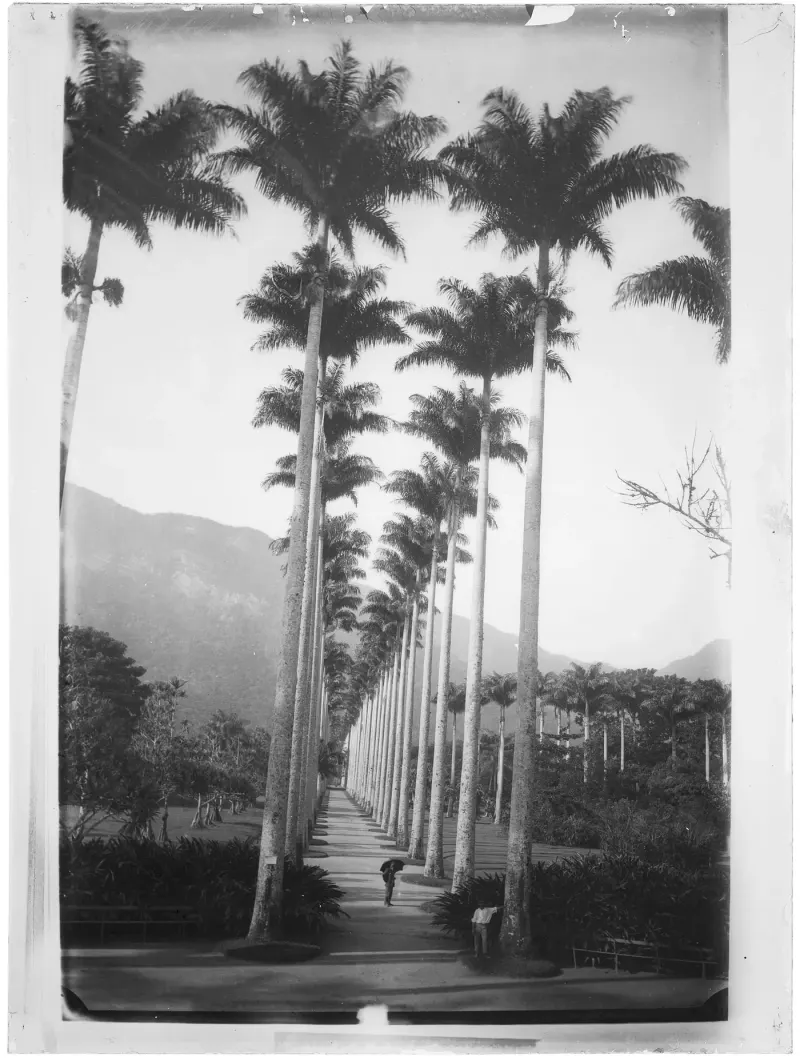
The Botanical Garden was founded in 1808 by the king of Portugal, Joao VI, and holds thousands of plant species, with the catalogues counting them somewhere in the range of 6,500 to 8,000. These gardens are an important tourist side of the city and also an important research center for hundreds of species of trees and plants. The site covers about 137 hectares in total, of which roughly 54 hectares are the cultivated arboretum you actually walk through and the rest is protected Atlantic forest. Inside you can see rare collections of bromeliads and orchids, as well as various trees and exotic plants. You can wander at your leisure through the garden paths, marveling at the size of the trees, the shapes of the leaves of the different plants, the giant bamboos and more and more. The most famous tree is the imperial palm, the symbol of the Botanical Garden, which can rise to the height of a 15 story building!!!
Tip: before entering the garden itself through the ticket booths, take a look at the museum and the visitors center, a house from 1576 that functioned as a sugar mill and today holds a small exhibition on the history of the Botanical Garden. Entry to the museum is free, but you still need to reserve a ticket for it through the same online ticketing site, and it keeps its own hours: roughly 10:00 to 18:00 from Thursday to Tuesday, with last entry an hour before closing, and closed on Wednesdays.
Opening hours: the arboretum is open Thursday to Tuesday from 8:00 to 17:00, and on Wednesdays from 11:00 to 17:00. Entrance fee: the garden charges foreign visitors and residents differently. A visitor from abroad pays around R$80, someone who can show they live in Brazil pays around R$40, and there is a half price rate for students, people with disabilities, under 21s and over 60s, with free entry for small children. Tickets are sold online and at the booth, and buying online saves you the queue.
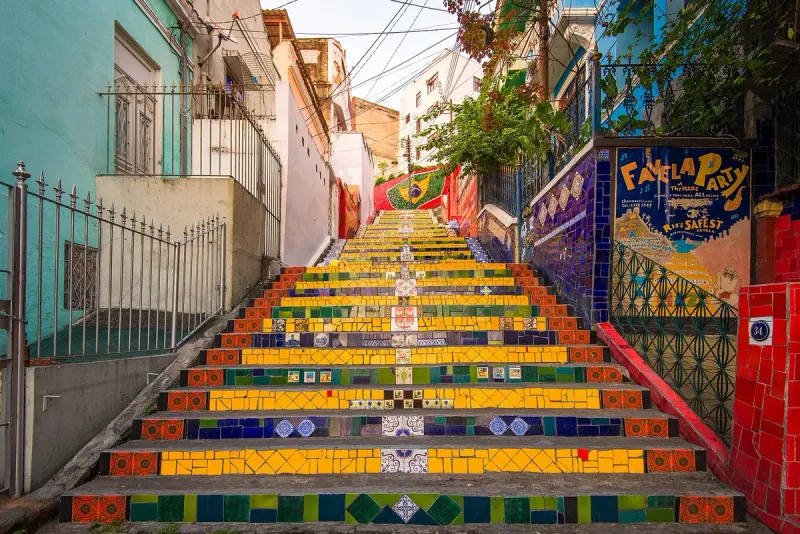
You have returned to the hotel, rested, and you are ready to go out. You can take the metro from Copacabana or Ipanema to Cinelandia station and walk about 10 minutes from there to Lapa. A single metro ride is a little under R$8 per person, and the fare is reviewed every year, so expect it to creep up. An Uber to the same place is a short ride: simply type Escadaria Selaron for the colorful steps of Lapa and the app will quote you before you confirm.
Lapa, the Colorful Steps and a Live Show
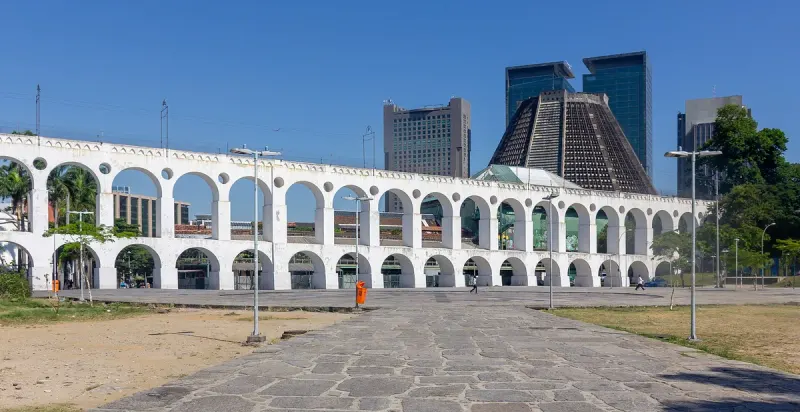
Lapa is Rio's nightlife neighborhood, concentrating a large number of nightclubs and bars, most of them on Avenida Mem de Sa. If you come to Lapa on a weekend you will find the streets bustling with partygoers. Many of them come to drink at the bars along the avenue and then enter one of the clubs in the area. Midweek the streets are of course emptier, but there is still some activity. Lapa is known for its live shows, from samba to rock and forro. Top-tier Brazilian artists perform in Lapa's main clubs, so even if you have no clue about Brazilian music it is worth going into one of the shows to feel the atmosphere and enjoy the polished, professional production.
Tip: we recommend arriving in Lapa at the beginning of the night, passing by the colorful steps on Rua Joaquim Silva and walking 5 minutes to the Lapa Arches, a great aqueduct that is one of the city's symbols. On weekends, masses of alcohol and food vendors gather near the arches. Continue on Avenida Mem de Sa and stop at one of the bars (botecos) at the junction of Mem de Sa and Lavradio streets. There you can order draft beer (chope), caipirinha or another drink. Alcohol prices are cheap compared to Israel. Around 11 or 12 at night, enter one of the clubs and carry on with the night.
Recommended clubs in Lapa:
Circo Voador: one of the veteran clubs, located at the foot of the Lapa aqueduct, where the giants of Brazilian music usually perform. Shows usually take place on Friday and Saturday. Expect polished performances and an enthusiastic crowd. Shows start around 11, and it is worth arriving a bit earlier to soak up the atmosphere. Ticket prices follow the line-up, from somewhere around R$60 for a smaller night up to R$200 for a big name, with a cheaper student rate. On the club's website you can check which show is on and buy tickets, and the box office at the venue opens in the afternoon midweek. Look up the singer or the show on YouTube and see if it suits you.
Fundicao Progresso: across from the Circo Voador is this club, which used to be a bottle factory. Here too you can find top-tier bands and singers, DJs and more. The club itself is very large and can hold thousands of people. Address: Rua dos Arcos 24, Lapa.
Rio Scenarium: a club spread over 3 floors that usually plays samba and Brazilian music. Here you can sit facing the stage, eat and drink, and listen to and watch the musicians. There is a dance floor for samba and ballroom dancing. The doors open in the evening, from around 19:00, and on a Friday the place runs into the small hours. Its audience is Brazilians as well as tourists. The place began as an antique furniture shop, and even today those items decorate the club and create a special atmosphere. Tickets are sold on its own website and the price moves with the line-up. Address: Rua do Lavradio 20, Lapa.
Leviano: a bar club by the Lapa arches that has become a fixture of the neighborhood's show scene. A fairly touristy place with a separate disco floor, live shows and tables out on the pavement. Address: Av. Mem de Sa 47, Lapa.
Carioca da Gema: a club that is a legend in Lapa. In fact it is one of the clubs that started the transformation of Lapa, turning it from an abandoned neighborhood into an empire of clubs and pubs and the center of nightlife in Rio de Janeiro. The club's repertoire is mainly live samba shows, and it is very crowded on weekends, though open on other days too. The main band usually goes on around 21:30, and the door charge is modest, generally in the R$30 to R$40 band and a little higher on Friday and Saturday. Address: Av. Mem de Sa 79, Lapa.
Day Two: The Cable Car Up Sugarloaf and a Walk in Urca
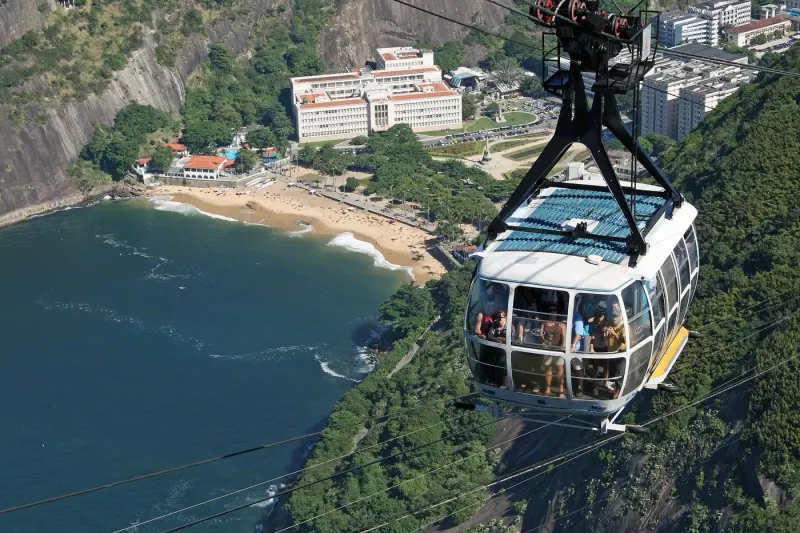
Sugarloaf Mountain is also an important symbol of the city of Rio de Janeiro. Many travelers choose between the Christ statue and Sugarloaf for looking out over Rio from above. The truth is that the two views are completely different. While the Christ statue stands at a height of 700 meters right in the center of the city, giving a 360 degree view, Sugarloaf is on the waterline and its height is only about 400 meters. From it you can look out over Guanabara Bay, the city of Niteroi on the other side of the bay, and the southern neighborhoods of the city: Botafogo, Copacabana and Ipanema. Our recommendation: if you have time and you are already here, it is worth going up. Especially since here we will give you a few tips on how to combine the visit to the mountain with a walk in the Urca neighborhood and an option to hike up on foot on a trail that passes through tropical forest.
Ways to reach Sugarloaf (the site entrance): Uber: from Copacabana and Ipanema this is one of the cheapest rides in the tourist area, a matter of minutes. Type the address Av. Pasteur 520 (and not the name Sugarloaf in Portuguese, so you do not end up at the supermarket with the same name).
Bikes: around the city you can find orange bike stations. Take a pair and set off. Ride along the coastline on the bike path, turn left at Av. Princesa Isabel (the Hilton hotel), go through the tunnel, continue straight to the end and turn right to Urca (or use GPS). In less than 20 minutes you will reach the site. In the entrance area there are two stations where you can return the bikes.
How to go up Sugarloaf. Cable car: the site consists of two mountains, Morro da Urca, the lower one, which the first cable car reaches, and Sugarloaf itself, reached by a cable car leaving from Morro da Urca. On the Sugarloaf website you can buy tickets in advance, or simply at the ticket booths, and the online price is lower than the booth price. On the website, choose English at the top right, go to My Cart, complete the registration and choose Cable Car Ticket. This is the single most expensive ticket in this article, so brace yourself: a full price adult ticket for a visitor from abroad is around R$205, someone who can prove they live in Brazil pays around R$160, and ages 6 to 21 and over 60s pay around R$102. There are also premium and VIP options that cost considerably more. The park is open every day from 8:00 to 21:00, with last entry at 20:00. After going up you will reach the first mountain. Besides the stunning view, here you will find shops, bathrooms and food stands. From here take the second cable car and continue to Sugarloaf itself.
On foot: there is a walking trail through which you can reach the first mountain. The walk is short, around 800 meters, but the climb is quite steep, and most people take 30 to 40 minutes. The walk is inside the forest and along the way you can rest and enjoy the view. For those who go up on foot, entrance to the first mountain is still free, and this is the best value in the whole park. Two things to know: the gate at the top of the trail, the one that lets you into the park itself, works daily from 9:00 to 17:00, so do not arrive late in the day. And if you want to continue up to Sugarloaf, you will need to buy a cable car ticket at the booths at full price. Personally, I recommend arriving in the morning when the trail is still relatively empty and the weather is pleasant and not too hot.
The site itself is very close to a beach called Praia Vermelha, a small, beautiful beach worth knowing. To reach the trail, walk toward the beach and turn left to its far end. There you will find the entrance to a 1.25 km walking path that runs parallel to the sea inside the forest. Start walking along the path, and after about 400 meters you will see the entrance to the trail.

A Walk in the Urca Neighborhood
Sugarloaf is located in the Urca neighborhood. This is a calm and quiet neighborhood far from all the bustle of Copacabana and Ipanema. Many military families live in the neighborhood. Since there is only one way in and out of the neighborhood, it is considered very safe.
You can do the neighborhood walk on foot or by bike. Return to Av. Pasteur (the main street) and walk toward the exit from Urca. Turn right on Rua Ramon Franco until the sea. Turn right along the waterline until you reach Praia da Urca, a small, pleasant beach with calm water. There you can find a nice, cheap restaurant that is also a bar called Garota da Urca. From there you can look out over the Botafogo neighborhood. Continue walking along the water on Av. Portugal to the end of the neighborhood. There is another restaurant there called Restaurante Urca. Beneath it there is a small kiosk famous for its pasteis. In the evening hours and on weekends the place is packed with young people who come to drink beer and eat pastel in the street, chat and gaze out over the bay. If you have time, I recommend taking a stroll around the neighborhood.
Eat at a Steakhouse and Drink Caipirinha
Another thing Brazil is known for is its steakhouses. The Brazilian way of preparing meat is different. Here they take large cuts of meat (a kilo or more), salt them with coarse salt, skewer them on a giant skewer and put them over the fire. Every so often they take out the skewer and cut the parts that are already done straight onto the plate. In Rio there is no small number of restaurants of this kind. Here we have brought you a partial list of the better known ones. If you are meat lovers, this is a highly recommended experience. Also, do not forget to order caipirinha, the Brazilian national drink.
The first two steakhouses are very close to Urca, less than 5 minutes by car and a very cheap Uber, so if you are hungry after the walk, hop over for lunch. One general note before the list: an all you can eat rodizio at the well known houses is not a cheap meal any more, so look at the per person price on the menu at the door before you sit down, and remember that drinks and the service charge come on top.
Fogo de Chao: not far from Urca, located on the waterline of Botafogo bay and therefore with an impressive view of it. A restaurant that is part of a chain founded by the son of cattle ranchers from southern Brazil. These people (called gauchos) are considered meat artists in Brazil. Reckon on around R$200 or so a head for the rodizio before drinks. Address: Av. Reporter Nestor Moreira S/E, Botafogo. Opening hours: Monday to Saturday from 12:00 to 23:30, Sundays and holidays until 22:30.
Assador Rio's: with a view of Sugarloaf and Urca, the Assador restaurant sits on the Flamengo landfill park, and it too carries the gaucho tradition from southern Brazil. Address: Av. Infante Dom Henrique S/A, Aterro do Flamengo. Opening hours: Monday to Saturday from 12:00 until midnight, Sundays and holidays until 22:30.
Carretao Ipanema: another traditional steakhouse and one of the most famous in the city. Address: Rua Visconde de Piraja 112, Ipanema. Opening hours: every day from around 11:30 until about 23:00.

Sunset at Arpoador Beach
Arpoador beach is at the northern end of Ipanema beach and separates it from Copacabana beach. It is the only stretch of beach in the area that does not border a road, so it is quieter. It is also a beach whose waves suit surfing because they are more orderly. On this beach you will find Arpoador Rock, a kind of giant rock jutting out toward the sea. At the end of every day, hundreds of people come to this rock to watch the sunset over the Two Brothers mountain (Dois Irmaos).
Tip: our suggestion, take a bottle of wine with you, grab a spot in the stands and enjoy the best show in town.

Day Three: Favela Tour
Rio de Janeiro is a city that connects, among other things, poverty and wealth. The class differences here are something you cannot ignore. What is special about Rio is that the favelas are next to or inside the wealthy areas of the city. It is enough to look up, toward the hills, to see the small, neglected houses of the favela.
So why visit a favela? In our opinion awareness is important, and not everything that is not pleasant to the eye deserves to be ignored. This is not a marginal part of the city: the 2022 census counted more than two million people living in favelas and urban communities across Rio de Janeiro state, and Rocinha, right here in the south of the city with over 70,000 residents, came out as the most populous favela in Brazil. Besides the residents themselves you can get to know the social projects run there, the way of life and the customs of the local people.
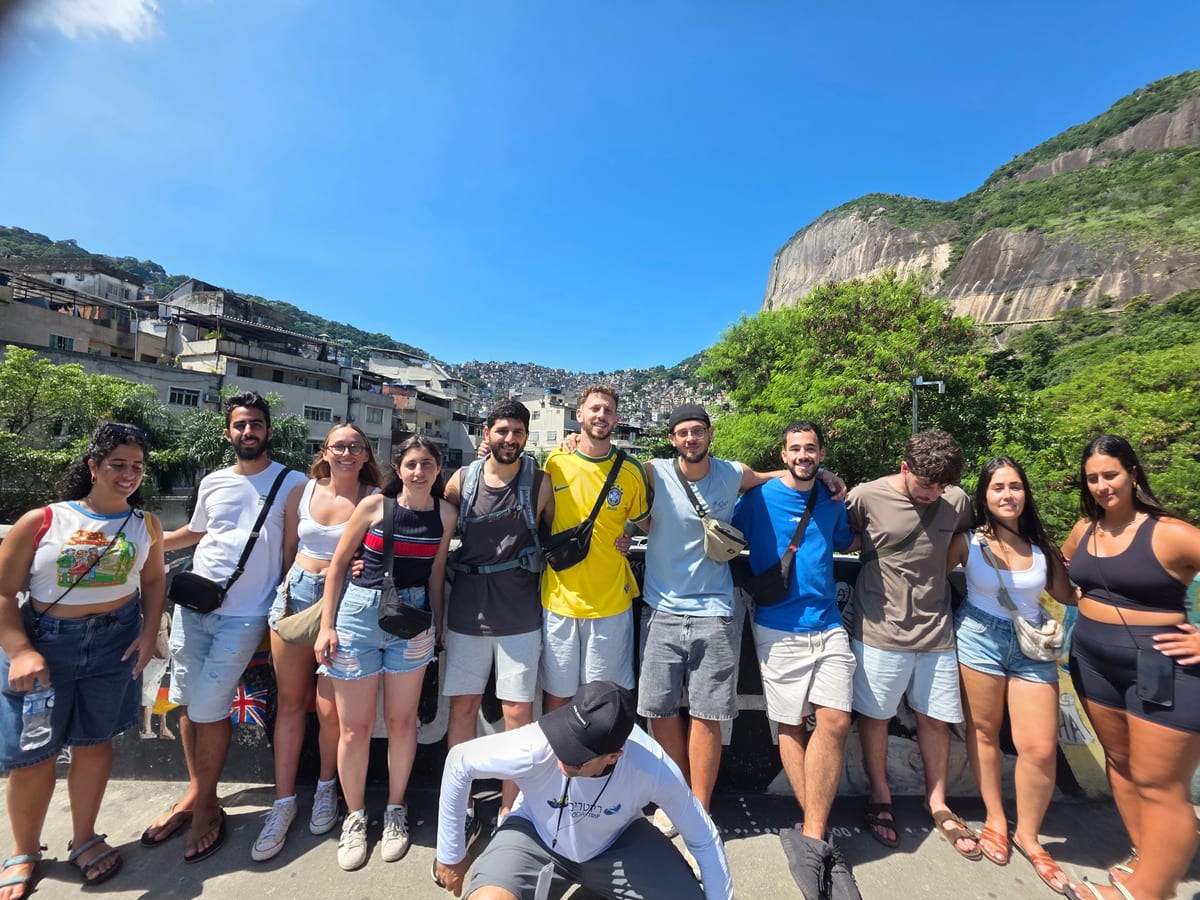
Of course, it is recommended to enter the favela with a guide who is a local resident. That way you support local livelihoods, get to know the place better and are 100 percent safe.
You can learn more about the favelas in an article we published. We will mention again (ads...) that we run private tours in the Rocinha favela, the largest in Rio de Janeiro, and part of our day trip, RioTrip, includes a favela tour.

Hang Gliding Over Rio
Why get up in the middle of your life and jump? First of all, you are in Rio de Janeiro, so go wild. Second, the view. The jump is from a table mountain called Pedra Bonita (the beautiful stone) that sits inside a forest and faces the beach. The view during the glide is amazing, and the landing takes place on the warm sand! If you want to know how a bird feels, this is your chance. The last reason is safety: the pilots in Rio are professionals with thousands of gliding hours, simply because this is their job and they glide every day, all day. So what are you waiting for? Off you go!
RioTrip is an Israeli travel agency in Rio de Janeiro. We run day trips in the city and the area, and also organize trips for private groups according to the client's request. We would be happy to help you plan your trip in Rio de Janeiro and in Brazil.
Written by Izhar Cohen (not the singer...), with more than 23 years in tourism, guiding travelers in Rio.