Published on November 12, 2018, updated on August 8, 2026 with current prices and details.
In this article I will talk about the Iguazu Falls area in general and give some important advice about the lesser known trips in the area.
My name is Benny, a certified tour guide with more than 23 years in tourism, guiding travelers in Rio. If you come to the area and want information I will be happy to help; I come to Iguazu from time to time to guide. Over the years I have visited Iguazu more than ten times, and every time I come to the area I travel around it for two weeks. Each time I discover new hidden gems, so for anyone who loves nature, authentic indigenous culture, gemstones, handicrafts and excellent food at fair prices, I warmly recommend visiting the area for more than a day or two, to get to know many more amazing places beyond the falls in the reserve.
Everyone has heard of the Iguazu Falls, and almost everyone who comes to Argentina or Brazil wants to see the falls in at least one of the countries (there is a park on the Brazilian side and another park on the Argentinian side), and usually whoever can visits both sides. I will present you with more options that are less famous, for those who love authentic places off the hummus trail.
The Falls Themselves
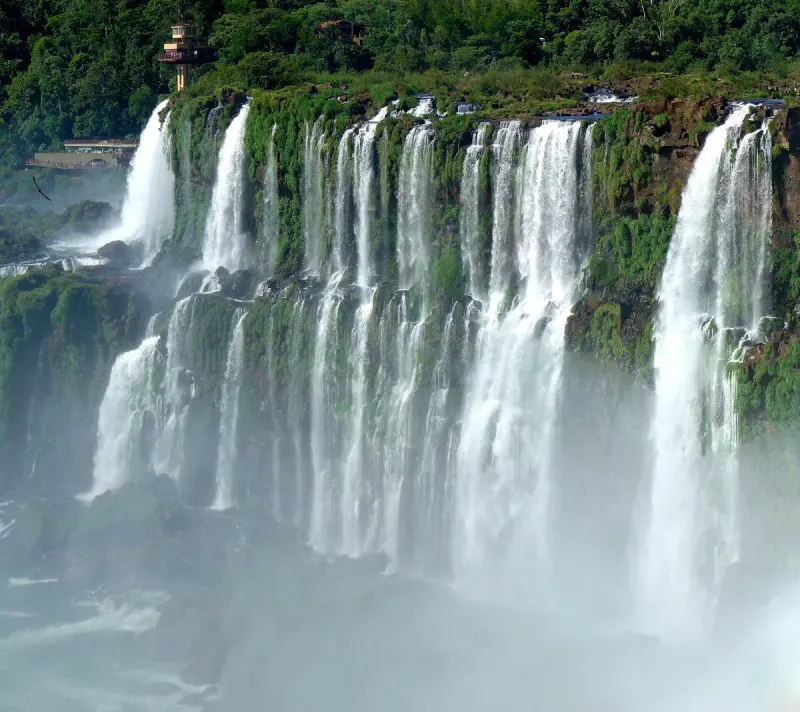
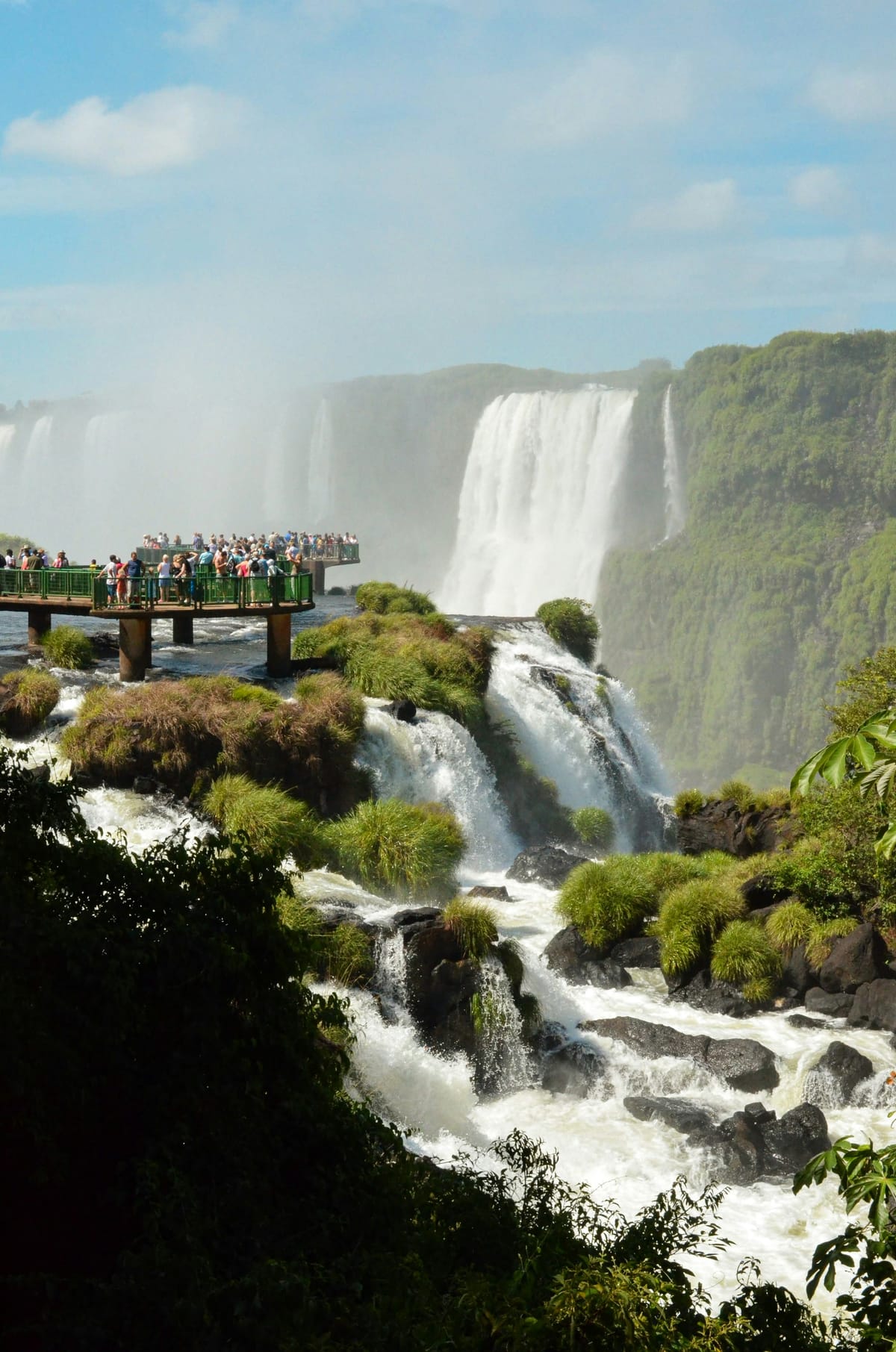
Much has already been written about the falls and it is very easy to find plenty of information about them, and this is definitely the first place you will want to visit! Take raincoats and bags to keep in them whatever cannot get wet.
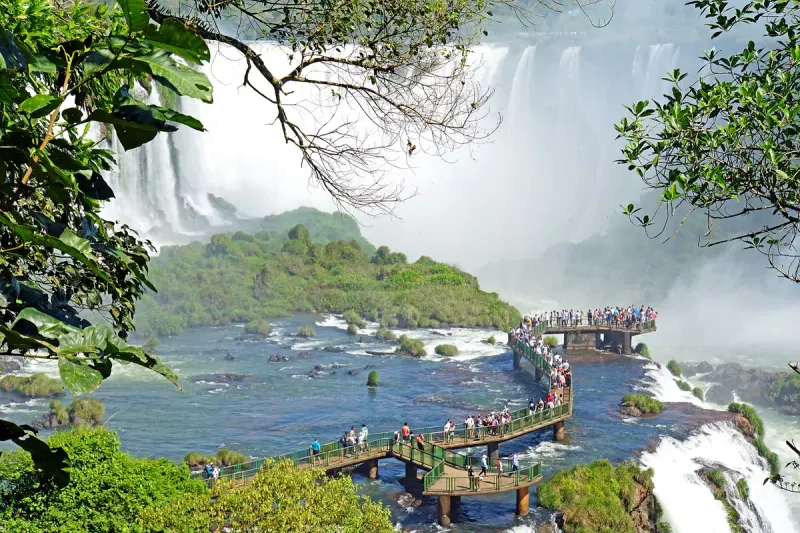
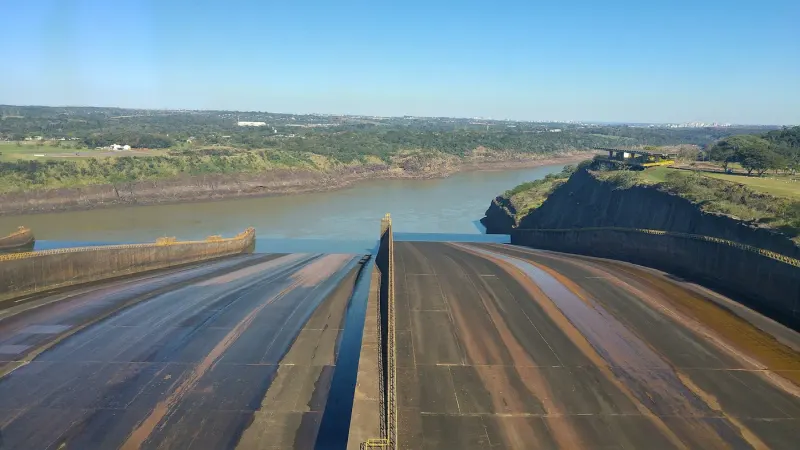
The falls themselves are frightening in their size and power. You can walk on bridges above the water and reach stunning viewpoints. In some places you get within a few meters of the fall and get wet, but it is always a fun experience because it is hot and very humid there, so it is refreshing. A revival!
A word about the entrance fees, because they have moved a long way and they now move every year. On the Brazilian side, the Iguacu National Park charges a general visitor rate of around R$134, with a slightly lower rate, around R$121, for Brazilians and Mercosur citizens, and there is a community pass for residents of the neighbouring towns. Children up to 6 go free. The ticket covers the falls trail, the other open trails and the internal park buses, and tickets are sold online with a date and time slot, which is by far the easier way to do it. On the Argentinian side the park charges foreign visitors, and Brazilians count as foreign visitors here, several tens of thousands of Argentinian pesos, which at the time of writing works out at roughly the same as the Brazilian ticket or a bit more. The important detail on the Argentinian side is that if you go back a second day in a row you pay half price, so keep your ticket and get it stamped on the way out. Argentina reprices in pesos far more often than Brazil does, so check the park's own site the week you travel rather than trusting any number you read in an article, including this one.
Inside the parks, the Brazilian or the Argentinian, there are all sorts of different excursions. When you enter the park you will see a stand with all the information about these tours.
Personally, I most enjoyed the boat that sails toward the fall and gets really close to it. On this trip you get soaked to the bone even with regular raincoats. Whoever chooses to do this tour is given a waterproof bag. It is recommended to stuff all your spare clothes and shoes into it so you can change on the way out.
Another amazing tour is a helicopter flight over the falls. One thing has to be said clearly here, because a lot of old articles still get it wrong: the helicopter flies only from the Brazilian side, out of Foz do Iguacu. Argentina banned scenic flights over its part of the falls years ago because of the noise and the effect on the wildlife, so there is nothing to compare on price. Like the boat, the flight is an extra on top of the park entrance, it is one of the more expensive things you can do here, and it lasts about ten minutes.
A side note about money, and this is the part of the original article that has aged the most. For years the standard advice was to arrive in Argentina with a wad of dollars and change them on the informal market, where you would get far more pesos than the official rate. That world is gone. Argentina lifted the currency controls on individuals in 2025 and the different rates converged: the gap between the informal rate and the official one is now down to a couple of percent, and it is not worth planning your trip around. In practice, paying with a foreign Visa or Mastercard in pesos gives you a fair market rate, cash dollars changed at a proper exchange house give you roughly the same, and ATMs are the one option to avoid, because the withdrawal limits are low and the fees per transaction are painful. So: bring some dollars in cash for small things and for places that do not take cards, use the card for everything else, and stop hunting for a special rate that no longer exists. In Brazil the situation has not changed: there is essentially no informal market, and you should simply use a card or an exchange house.
Itaipu Dam and the Three Borders
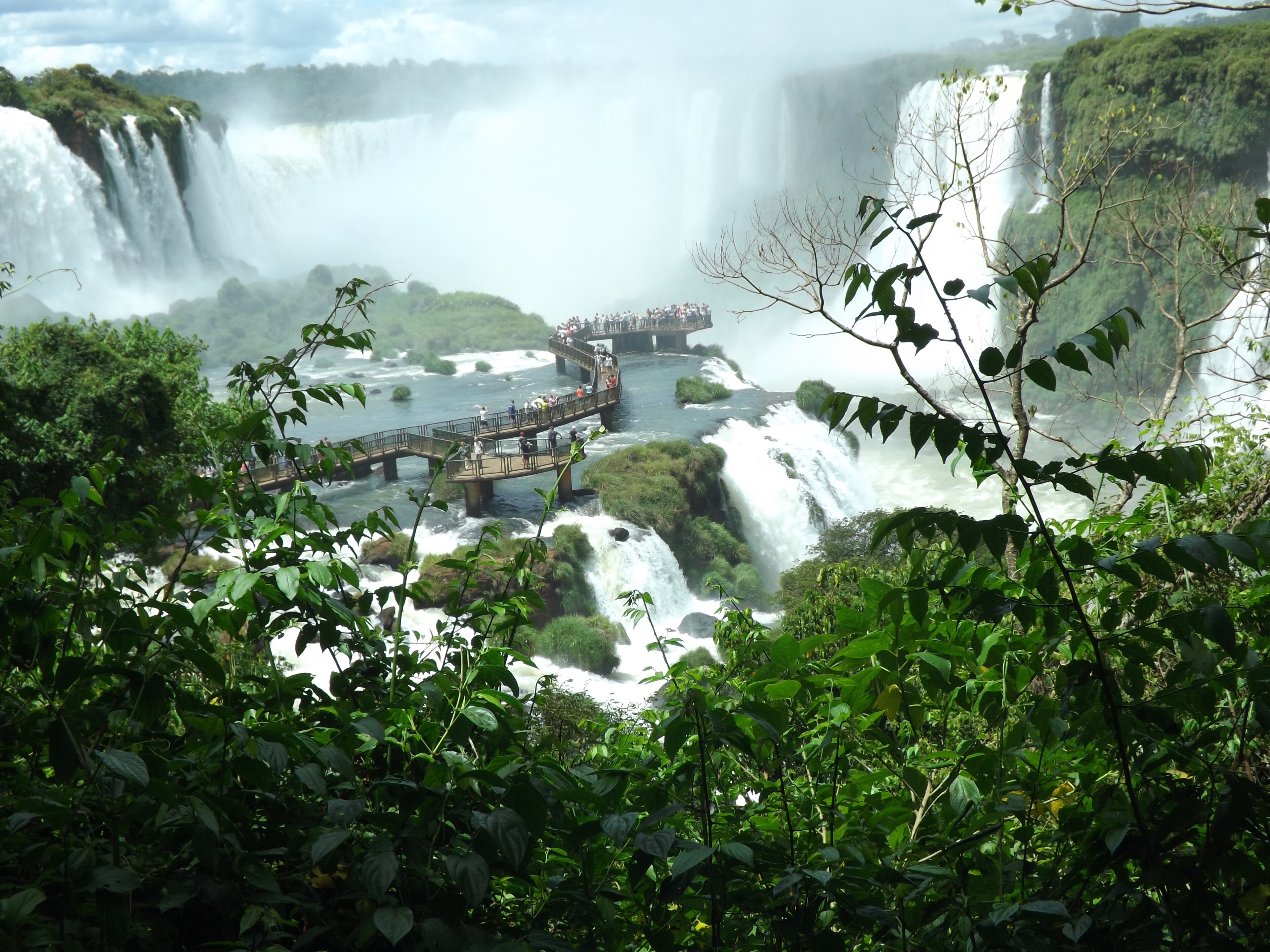
For anyone who has another half day in the area, I recommend getting to know Itaipu, one of the great hydroelectric plants on the planet, owned jointly by Brazil and Paraguay. Here is the honest version of the superlative, because you will still hear guides call it the biggest in the world. By installed capacity it is the second largest, at around 14 gigawatts against roughly 22.5 gigawatts for the Three Gorges dam in China. What Itaipu does hold is the record for how much a single plant has actually produced: it set the world annual generation record in 2016 and its cumulative output since it came online in 1984 is greater than any other plant's, which is a more interesting statistic anyway. A huge plant, and the tour of it includes a pleasant ride inside the facilities and next to or on the waterline of one of the widest and most powerful rivers in the world. You can visit the plant from the Brazilian side or the Paraguayan side. The two visits are similar, and the tour bus stops for photos on both sides of the dam, so either way you see both countries. The difference is the money: on the Paraguayan side the visit is free, and on the Brazilian side the tours are ticketed, starting from around R$45 for the panoramic bus and going up for the special circuit that takes you inside the plant. Check availability before you go, especially for the Paraguayan side, which does not run every day of the year.
Let us continue with the falls area, which actually sits on the Iguazu river that separates Brazil and Argentina. There is a branch of the river very close to the falls that turns into another giant river called the Parana, which separates Brazil and Paraguay.
One of my favorite places in the area is the meeting point of the two rivers, the Iguazu and the Parana. The point is also known as the Three Borders landmark. There, in the middle, the countries Brazil, Argentina and Paraguay created an interesting monument, and on all three sides there is an obelisk with the colors of the local flag. On the Brazilian side there is a lookout over the meeting of the rivers and the area, plenty of nature and water between the border towns. Do note that the Brazilian side, the Marco das Tres Fronteiras, is a ticketed attraction these days rather than a free viewpoint, it opens in the afternoon, generally Tuesday to Sunday from about 14:00 until 21:00 and daily in high season, and the cultural show in the evening is the reason to time your visit for the end of the day. The Argentinian viewpoint at Puerto Iguazu is the simpler and cheaper of the two. For those who love nature trips and treks, the visit to the area is really worth it, and there are many agencies offering plenty of attractions.
Recommendations for the Argentinian Side
The big attractions like the bird park, the butterfly park and the safari at Macuco are advertised by every website, hotel and travel agency, so everyone knows them. Since they are already famous, I will give you a few ideas for visiting less famous places, for anyone who has a bit more time to explore.
Aripuca
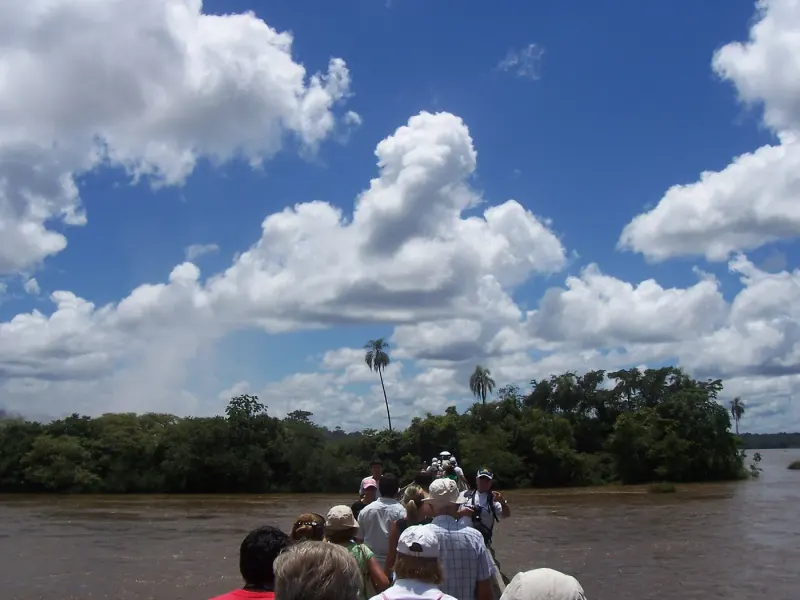
For anyone who loves indigenous architecture made only from natural materials, I warmly recommend the Aripuca on the Argentinian side. There you can see the largest aripuca (an indigenous bird trap) in the world, a structure over 17 meters tall built from the trunks of some 30 native species of the Misiones rainforest, weighing several hundred tons in total!!! Inside the site there are lots of attractions built of wood, and many indigenous people who live behind the site and offer handicrafts and gemstones at fair prices. It is open every day, including holidays, from the morning until early evening.
Casa das Botellas
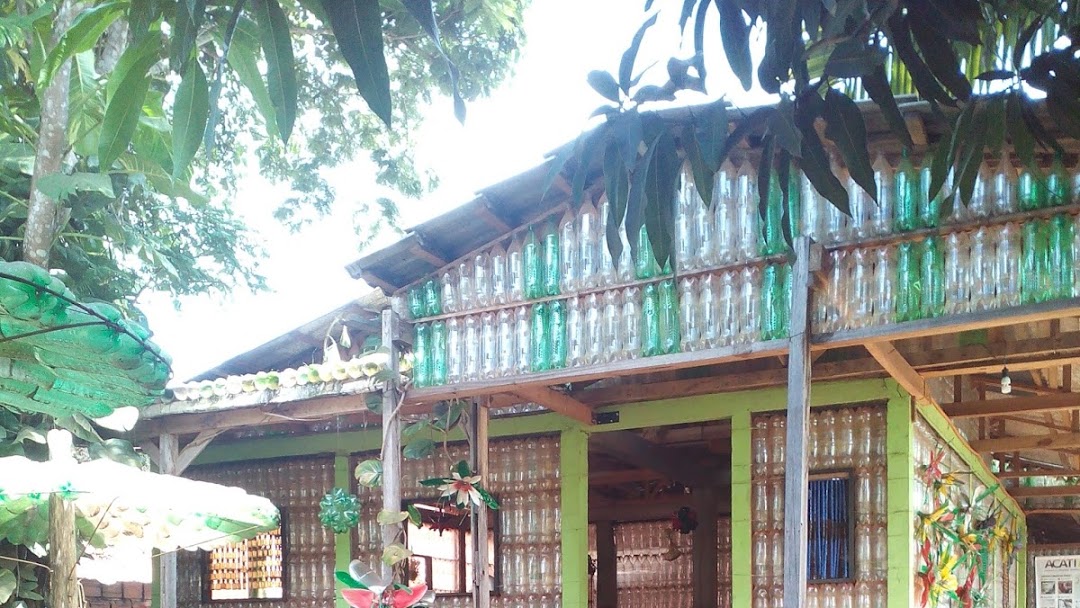
Nearby, a 15 to 20 minute walk away, you can see the Bottle House, a huge house made of recycled materials, mainly plastic bottles. Around it an amazing site has grown, full of original creations, most of them made by the owner and the team working with him on site, so you can also learn there and pick up great ideas. It is open daily and the guided visit takes about half an hour, though the hours shift with the season, so it is worth a quick check before you walk over.
Icebar
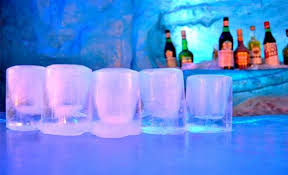
Close by there is another unforgettable place, a bar made entirely of ice! The temperature inside sits around minus 10 degrees, so you get thermal clothing and gloves at the door, included in the price. Their idea is excellent: pay the entrance and drink on the house while you are inside. You stay in the ice room for about half an hour and the whole visit takes roughly an hour, since there is a normal bar in the jungle setting next door to carry on in. Food and hard liquor are paid separately. It now opens every day from the early afternoon until midnight, but sessions have set start times and the last one is late in the evening, so it is still worth booking or at least checking before you turn up.
For casino lovers there are plenty of them in Argentina. They are still not legal in Brazil, and although a bill to legalize casinos and other games has been working its way through the Brazilian congress for years, it has not passed, so do not plan on one. In Argentina the locals dress up to go to the casino, and some places require appropriate attire, which usually means closed shoes and long trousers. In most places it is not required at all, unless it is a fancy casino, and even then they might let you in because you did not know the custom.

Recommendations for the Brazilian Side
Polo Astronomico: for those who want to feel a little closer to the stars, this is a fascinating journey through the universe, with a planetarium, an observatory and viewing platforms. One important update before you put it on the list: the Polo closed in 2020 after eleven years at the Itaipu technology park and is being rebuilt at the Itaipu Ecomuseum, with a new planetarium and a stronger telescope. The reopening has already slipped more than once, so check that it is actually receiving visitors before you plan a trip around it, and if it is, book a session, because the visits run at set times through the day with extra evening slots at the weekend.
The Buddhist Temple: the Chen Tien Buddhist temple of Foz do Iguacu is one of the largest in Latin America. It was built in 1996 by the Chinese community of the triple border (Brazil, Paraguay and Argentina), is located in a high part of the city and has an amazing view. It has more than 120 statues over two meters tall standing facing the sunset. Entry is free, no booking needed, and it generally receives visitors Tuesday to Sunday through the middle of the day. Give yourself an hour to an hour and a half to walk the gardens properly.
The Guarani Forest
Located in the center of Foz do Iguacu, next to the Taruba hotel. This is the ideal place to enjoy nature. It has many animals and the surroundings are quiet. In addition, every Friday an art fair is held in front of the forest entrance, from the late afternoon into the evening, with something like seventy stalls. At the fair you can find handicrafts by local artists and delicacies from the local kitchen: homemade cookies, hand-decorated frames, towels, handmade bracelets and other assorted items.
One last practical note. Iguazu sits across three countries, and between them the ticket prices, the opening hours and even the exchange rate can change between the day you read this and the day you fly. Everything above is current as we write it, but treat it as a starting point and confirm the details that your plan depends on. If you would like us to check something for you, or to put the whole trip together, message us on WhatsApp at +55 21 98689-5321.
Have a pleasant trip, Benny.
Benny Klein is an Israeli tour guide in Brazil and the owner of the Riokadim tour.