Published on February 24, 2020, updated on August 8, 2026 with current prices and details.
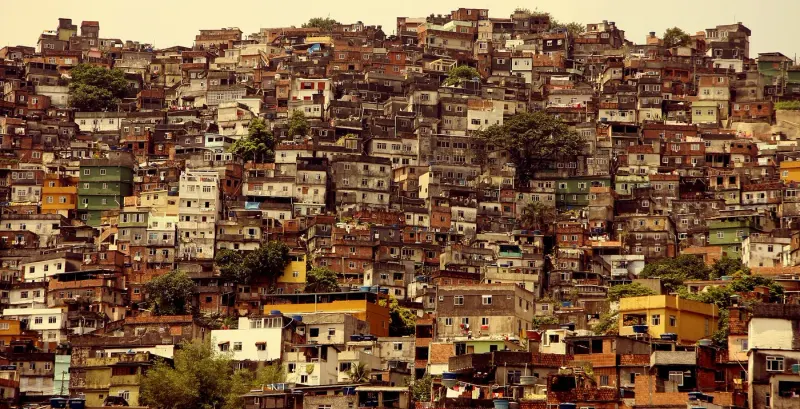
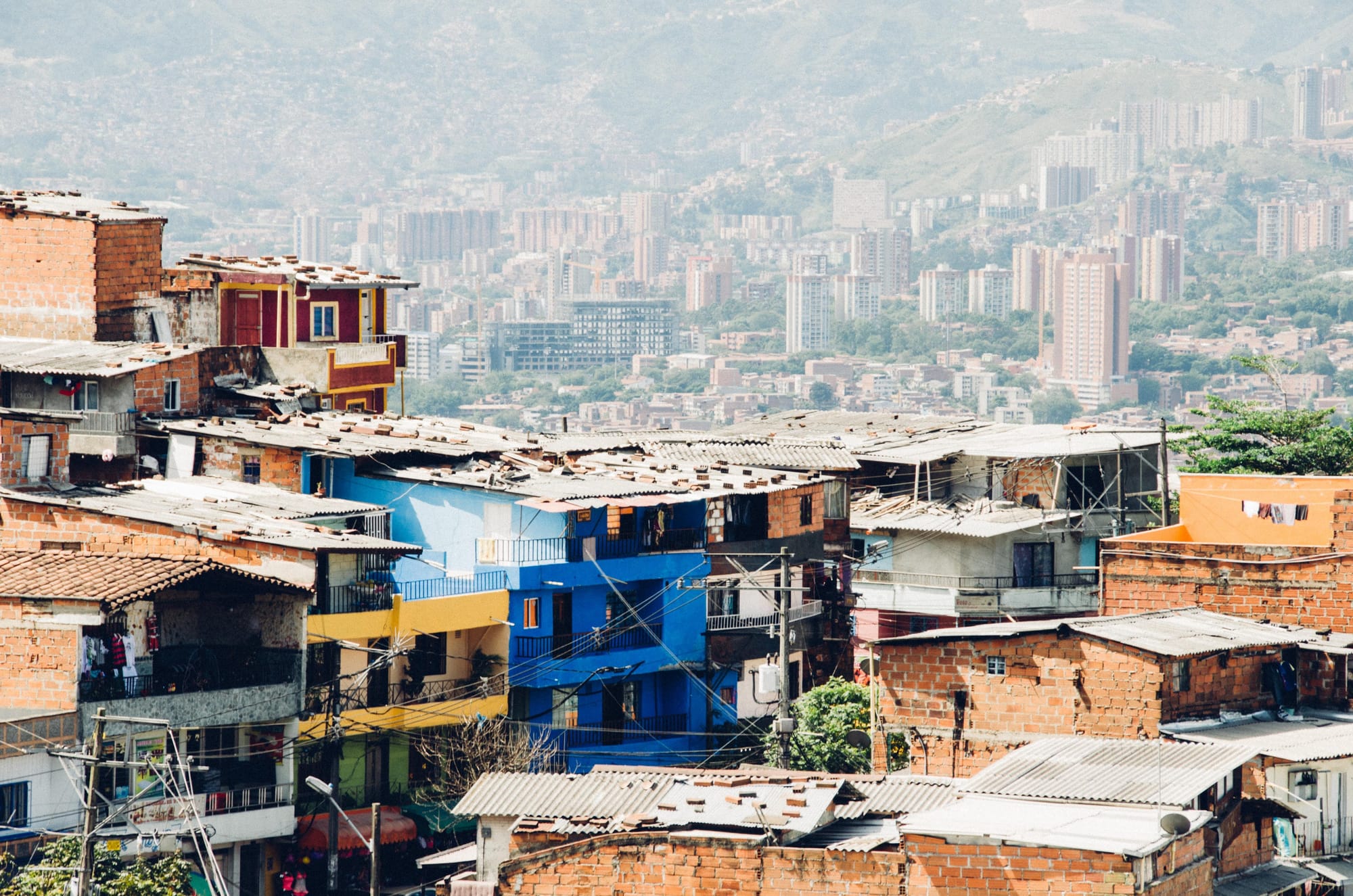
In recent years, poverty tourism has developed in shanty towns all over the world, and so, alongside Rio de Janeiro's countless tourist attractions, a new attraction was born at the beginning of the millennium: the favelas, the famous poor neighborhoods of Rio and of Brazil. Unlike most shanty towns around the world, the favelas in Rio are located inside the city, right next to middle and upper class neighborhoods and in the tourist areas, so it is very hard to ignore them even if you try very hard.
From experience, many travelers hesitate about whether to go on a favela tour and be exposed to poverty and to what, in our eyes, as people who come from a country of plenty, seems like a certain kind of misery. In this context it is worth mentioning a much-quoted survey by the Data Popular institute and Cufa, which interviewed residents of dozens of favelas across Brazil and found that 94 percent of them described themselves as happy, and that around two thirds would not leave the favela even if their income doubled. That survey is a decade old now, but the sentiment behind it is something you still hear on every doorstep. The truth is we have no answer, and we do not intend to convince anyone to visit or not visit one of Rio's favelas. However, in my opinion, since a considerable number of the city's residents live in favelas, a trip to Rio de Janeiro would not be a complete trip without experiencing this part of the city too.
How It All Began: The First Favela in Rio
After the abolition of slavery in Brazil in 1888, by the Lei Aurea signed by Princess Isabel (Brazil was the last country in the Americas to abolish slavery, and it had already passed partial laws in 1850, 1871 and 1885 along the way), enormous numbers of freed people arrived in the city. These were people who until then had spent their entire lives in hard labor on the coffee farms scattered across the state of Rio de Janeiro. This mass of people arrived in the city with no real ability to work in anything other than manual labor, because they had no education and because of the heavy discrimination that sadly still exists today. A large part of the freed slaves concentrated in the city center around Central do Brasil, the central train station that was still under construction, and worked there. The vast majority of these people lived in large buildings where each family lived in one room, with shared toilets and kitchen. Since in those years the city center was considered the expensive part of town, in 1893 the mayor decided to abolish this type of housing, which caused thousands of people to lose their homes overnight. These people settled on their own on the hill behind the train station (Morro da Providencia) and founded the first favela in Rio and in all of Brazil.
One of the first houses in Morro da Providencia. Photo: Renascenca.
What Is a Favela?
In 1897, around 20 thousand soldiers returned to Rio de Janeiro from a war that had raged in the north of the country. Since these men did not receive their pay, they too came to the city center, to Brazil's war offices (located to this day next to the train station). These soldiers squatted on a farm and were later evicted from it. From there they too climbed up Morro da Providencia and settled on it.
During their time at war, these soldiers had lived, among other places, on a hill called Favela Hill, named after a plant that grows in northern Brazil. And so their new place of residence received exactly the same name, and from there the name spread to all the illegal settlements in Rio and in Brazil.
The favelas multiplied in parallel with the growth of the city and the creation of many projects that drew migrant workers to the city. These laborers needed to live close to work and began building their homes on the hills around the areas where more job offers were available.
How many are there today? Brazil's 2022 census was the first to map these neighbourhoods properly, and it renamed them officially: favelas e comunidades urbanas, favelas and urban communities. It counted 12,348 of them across the country, home to more than 16.3 million people, about 8.1 percent of Brazil's entire population, spread over 656 municipalities. Rio de Janeiro has hundreds of them, one of the highest counts of any Brazilian city, and reporting on the census figures put the share of cariocas living in one at close to a third of the city. Rocinha, where our visit takes place, came out of that census as the most populous single favela in the whole country, with just over 72,000 residents.
Drug Traffickers in the Favelas: Was It Always Like This?
The violence in the favelas and the drug trade began only in the late seventies, during the dictatorship that ruled Brazil at the time. The dictatorship saw the unemployed poor as a dangerous class that contributed nothing to the regime. Until then, the favelas were run mainly by people involved in illegal gambling (a gambling game called the animal game, Jogo do bicho, is common in Brazil to this day, and even now those who run it are considered very well-connected people). In that period crime surged in Brazil, and the police, due to their helplessness and other motives, dealt mainly with political matters against opponents of the regime.
That period was the peak of the drug trade in Colombia, and the American government began training its maritime police, the American coast guard, to close off the Caribbean islands as a gateway for drugs. With the closing of the Caribbean route and the Mexico route, the drug traffickers found a path for distributing drugs throughout Brazil. They found a weak and disorganized government, a corrupt country, a lot of suffering, and an area the government did not enter: the favelas.
Today the map is drawn by three trafficking factions, the Comando Vermelho, the Terceiro Comando Puro and the Amigos dos Amigos, plus a fourth force that is stranger than any of them: the militias, made up of former and serving police officers who switched to the other side and make their living collecting protection money from residents and businesses. Researchers at GENI, at the Fluminense Federal University, have been mapping this together with the Fogo Cruzado institute since 2018. Their most recent reading has the militias still holding the largest area of territory in greater Rio, while the Comando Vermelho has pulled ahead in population, and roughly a third of the metropolitan region's residents living somewhere under the control or influence of an armed group. Those balances shift from year to year. What has not changed is the underlying point: crime in the favela is a relatively new thing, and it was imposed on these communities rather than born in them.
What Is the State Doing?
Only in the nineties, when the favelas had already consolidated and their populations had become enormous, did the municipal government begin looking for ways to urbanize the favelas instead of simply demolishing them. During this period, programs like Favela Bairro (favela-neighborhood) began bringing infrastructure to these areas, such as running water, basic sanitation, garbage collection, public lighting and so on.
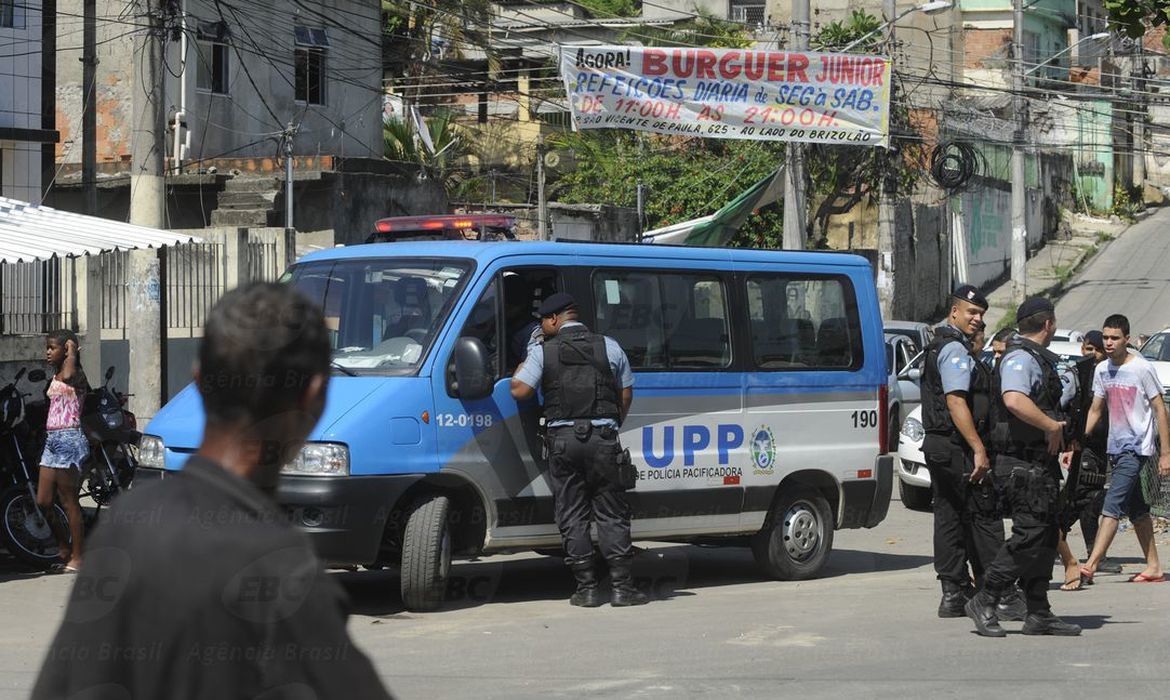
In 2008, ahead of the World Cup and the Olympics that took place in the city, the public security secretariat of the state of Rio de Janeiro began implementing the Pacification Police Unit (UPP) project, consisting of deploying community police units in favelas controlled by the drug trade and restoring the state's control over the territory. The project worked excellently until after the Olympic Games. Immediately after the games, most of the funding was cut and the drug cartels returned and took back control of most of the favelas. Police officers in action in a favela.
What Is It Like to Live in a Favela?
So much for the dry facts. But what is it really like to live in a favela, and who are the faces and names in its narrow streets? If you are in Rio right now or preparing to arrive, pay attention to the service workers in Copacabana and Ipanema. The street cleaners, the shop sellers, the housekeepers, the building doormen, the construction workers, the beach vendors. The overwhelming majority of them live in the nearby favelas. At the end of each workday they return home to the favela. These are simple people with a rare joy of life who were born into a reality that is not simple at all, of poverty and of life in crime areas. In recent years a large part of them have become evangelical Christians due to the church's penetration into the vacuum created by the state's abandonment.
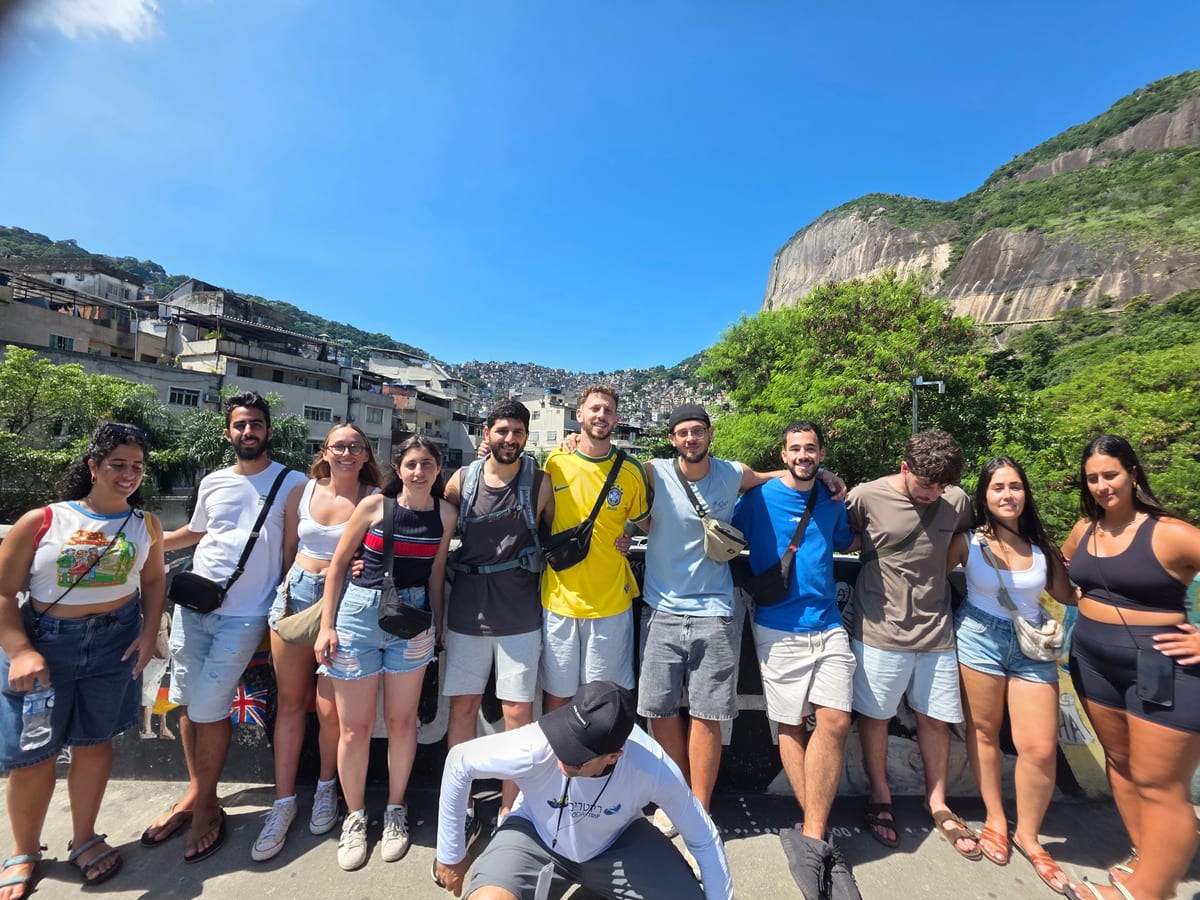
In the Rocinha favela, located south of Ipanema, where our favela tour takes place (as part of our day tour in Rio), you will find a community proud of its heritage.
The bustling, energetic streets give the place an identity of its own, and the never-ending party atmosphere gives character to what is already an exceptional favela. Now let us be straight with you about safety, because you deserve an honest answer rather than a sales pitch. Parts of Rocinha are under the control of armed groups, and no guide, ours included, can promise you that nothing will ever happen. What we can tell you is how it actually works. Petty crime against people inside the community is rare, because the community does not tolerate it and because residents know each other. The risk that does exist is a different one: police operations and confrontations between groups, which flare up without warning and are the reason we watch the situation every single morning before we take anyone in.
So the rules are simple, and they are the same rules we follow ourselves. Go in with a guide who is from the community or works with it every day, not with someone who read about it. Go on foot with a small group, not in a jeep with a camera pointed out of the window. Ask before you photograph anyone, and accept no for an answer. Do not wander in on your own, do not go looking for the areas your guide steers you away from, and do not go at night. Follow that and most visitors come away describing the morning as one of the warmest and most ordinary experiences of their trip: kids on their way to school, a barber's chair on the pavement, someone's grandmother selling coffee. That is the honest version, and it is a better reason to come than a promise nobody can keep.
The residents of Rocinha suffer from harsh living conditions, and many live without the most basic services, yet despite this, the community still takes pride in keeping their favela as clean as possible. Banks, supermarkets, gyms and pharmacies make Rocinha a city within a city where everyone serves a purpose. Stereotypes harm this community, which continues to suffer, and severely undermine the hard work and perseverance of the thousands who live there. Many aspire to improve their lives, and they deserve to know that not everyone sees them in a negative light.
Rio Trip is an Israeli tour agency in Rio de Janeiro, with more than 23 years in tourism, guiding travelers in Rio. We run day trips in the city and the surrounding area and also organize tours for private groups according to the client's requests. The favela visit runs with local guides and only when the community is calm, so message us on WhatsApp at +55 21 98689-5321 for current dates and what it costs.