Published on December 23, 2019, updated on August 8, 2026 with current prices and details.
My name is Benny Klein, Israeli and Brazilian. I have more than 23 years in tourism, guiding travelers in Rio, and I own the company Rio Trip. I have personally guided thousands of Israelis who came to travel here, and over the years I celebrated and took part in quite a few Carnivals in all the famous places, and also in some less known ones, like the one in Itaunas.
This article deals with an important and central topic of a trip to Brazil: the Carnival. I will explain the different types of Carnival in Brazil (so you can decide in an informed way where to go and not just run after the herd) and give you some background on the Brazilian people and how they fit into everything related to Carnival. In addition, I will also tell you how you can be active participants in the Carnival!
First, the question everyone asks me: when exactly is Carnival? It has no fixed date. Carnival follows the church calendar and always lands 47 days before Easter Sunday, which is why it slides around the calendar and can fall anywhere between early February and early March. In 2027 it comes early: the street party runs from Friday February 5 through Tuesday February 9, Ash Wednesday is February 10, and the champions' parade at the Sambadrome closes the season on Saturday February 13. Before you book flights, check the dates for your own year, because they move.
The Best Carnival in Brazil: Is There Such a Thing?
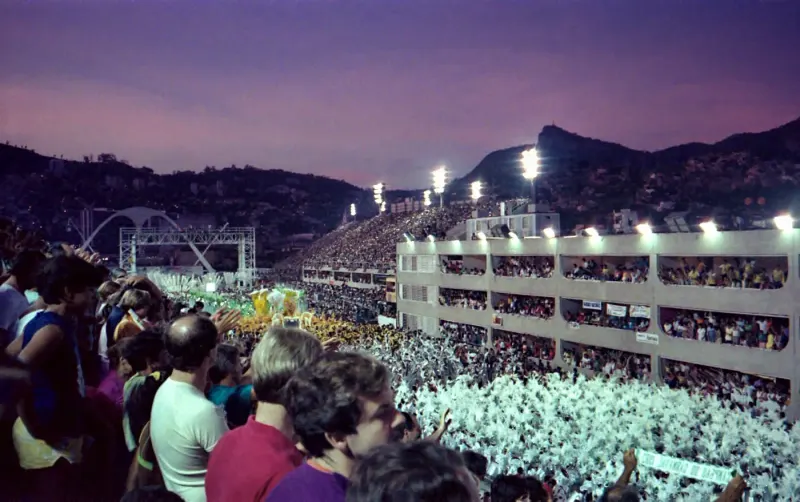
There is an ongoing argument among travelers and tourism companies about where the best Carnival in the country is. With more than 23 years guiding in Rio, I tour with tourists at Carnival every year and also actively take part in it, both as a reveler and as a performer in the blocos (the famous street performances). That is me at the Sambadrome in Rio de Janeiro.
So let us bring some order to the chaos, if it is even possible to bring order to a Carnival.
When people come and tell you where the best Carnival is, it is exactly like saying where the best falafel is; everyone has their favorite (mine is Falafel HaKochav in Even Yehuda). In short, it is all a matter of personal taste. Therefore, when you are debating where to celebrate Carnival, it is important to research and choose the experience that suits you best. It is important to know details about the Carnival, such as the music style (Rio: samba, Salvador: Axe, we will explain shortly with examples) and the type and location of the activities taking place at the Carnival (street parties, free giant concerts and more).
The Carnival is an event that takes place all over Brazil and also in other countries in South America and the world. So how can anyone tell you where you will have the best time if they do not know exactly what you are looking for and what you love? Maybe this is what you are into? A Greek carnival where the participants throw flour at each other.
Starting from the Beginning
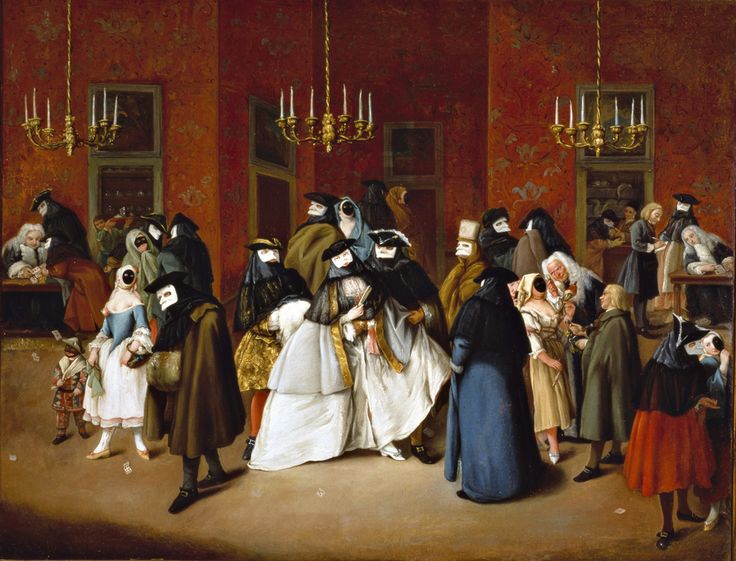
The Carnival was invented in the land of pizza and spaghetti, Italy, in the 16th century in the city of Venice. Originally the Carnival was a masquerade party of the upper class, held as preparation for Easter and the forty days before it. During those 40 days, Catholics abstain from eating meat, drinking alcohol and other pleasures of the flesh. To soften the blow, the Carnival was invented; its meaning, carne vale, farewell to meat. Four days during which it is permitted to celebrate and do almost anything before the coming suffering. The other peoples of Europe quickly discovered that they too should join the celebration, and so the Carnival reached France, Spain and Portugal. Very quickly the Carnival migrated to Brazil with the help of slaves who arrived from the old continent, and it was warmly adopted by the Brazilian people, who today are identified with it more than any other nation in the world.
The Carnival in Venice; it does not look like they are enjoying themselves.
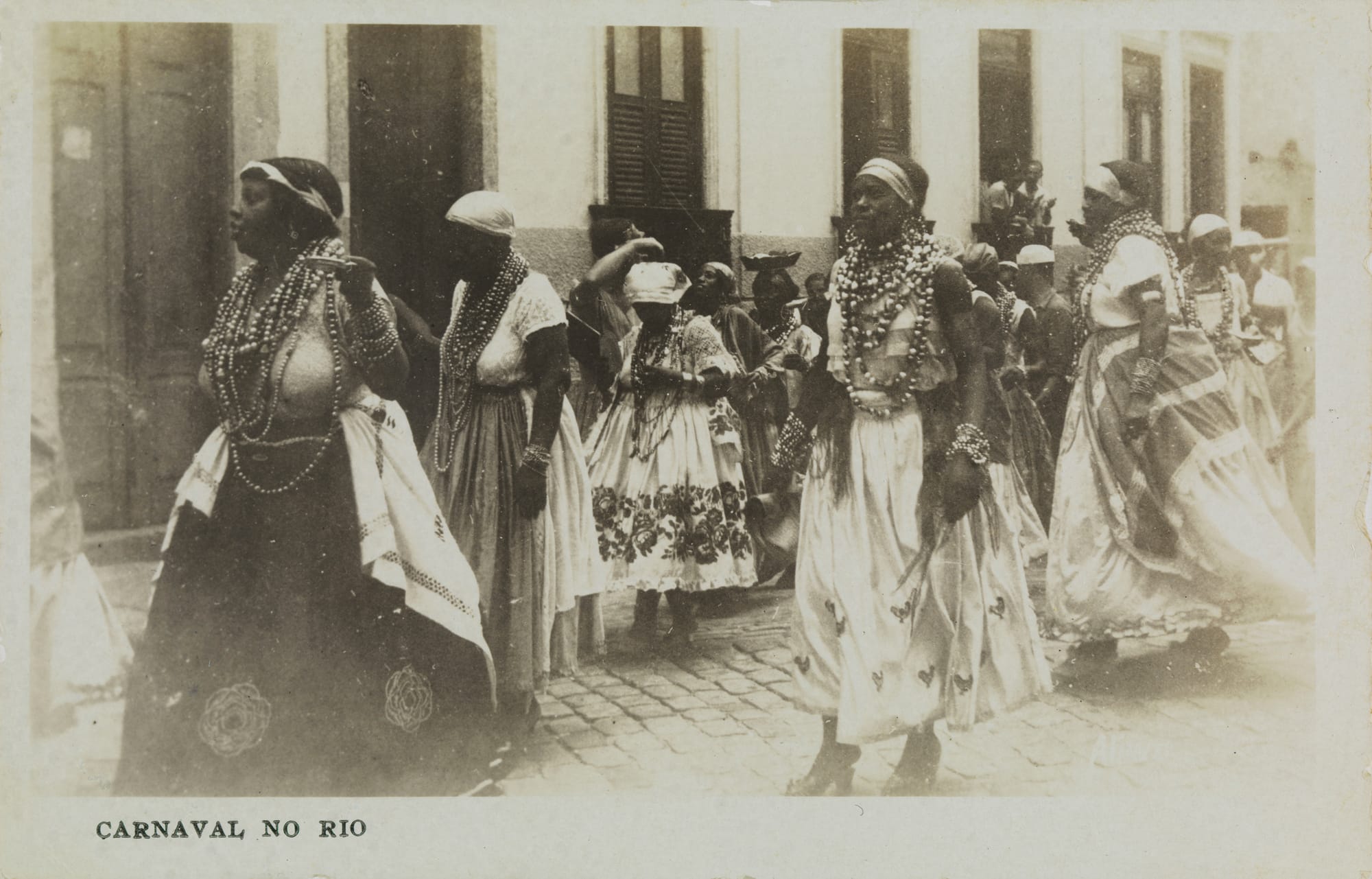
But like all beginnings, the Brazilian Carnival also had a hard start. At the beginning of the 17th century, Carnival parties began to appear in the state of Pernambuco: joyful processions in which slaves took part, mostly porters of sugar sacks and various goods. By the end of the 18th century, Carnival was celebrated all over Brazil in the same format. Of course the slaves' parties were not well received and were considered dirty and violent. Nevertheless, the vast majority of slave owners gave them freedom to take part in the celebration. Carnival in Rio de Janeiro at the end of the 18th century.
With the arrival of the Portuguese royal family in Brazil, several attempts were made to tame the celebrations and make them more European by stationing police officers at the centers of the festivities. In 1830 several laws were enacted that restricted the celebrations and threatened to wipe them out.
Samba Saves the Carnival
Samba was actually born in the state of Bahia, but it was quickly adopted by Rio de Janeiro and lives here to this day (we told you Brazilians love to adopt). Here it developed into a variety of styles, and in 1893, with the founding of the first bloco (which is the foundation of today's street parties), a fellow named Hilario, from the state of Pernambuco (where it all started, remember), wrote the first samba for the Carnival. A year later that same bloco performed before the president, which did not help Hilario, who was arrested several times by the police.
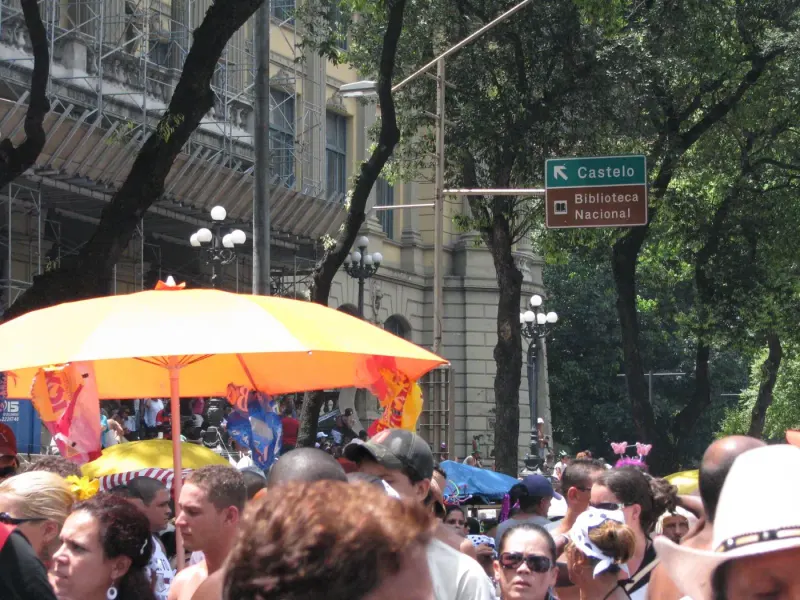
In 1889 the first legal blocos appeared in Rio de Janeiro, and in 1918 the oldest bloco that is still active was founded (recommended if you are here for Carnival): Cordao da Bola Preta. The Carnival would become legal only later, in 1935. This is what it looks like today: Cordao da Bola Preta.
What Carnival Means to Brazilians
In Brazil, 200 years after it was invented, the essence of the Carnival has not changed. Here, the Carnival symbolizes freedom for the entire people, from weekend to weekend, seven days in total. What you might call opium for the masses. The participants are usually young people, tourists and members of the lower class (nothing has changed). Middle and upper class people use the Carnival for a vacation in quieter places. In the big cities you will find free street parties and big concerts, but there is a Carnival even in the tiniest places, in a tiny version.
The simple people live in anticipation from Carnival to Carnival, saving money so they can travel or go out to parties and go wild, free. Because at the end of the day, the simple Brazilian people work very hard for low wages and wait for the Carnival all year to let loose, go crazy and forget life's troubles. It is important to remember that the national minimum wage in Brazil is R$1,621 a month, somewhere around R$54 a day. It is raised every January, so it will be a little higher by the time you read this, but the picture does not change: most of the people are hard-pressed folks who want to enjoy life, even if it is only for one week a year.
The simple people make the Carnival: a street cleaner dancing samba, only in Rio.
The people you see in the streets playing and dancing, the people sitting in the stands and paying to watch the competitive parades: this is the Brazilian people. Parents, grandparents, uncles and aunts, children of all ages. Everyone eagerly awaits a popular family celebration. The thrill of the Carnival has always been the most fun moment of their year, and it is what they look forward to.
The Carnival is divided into two types: the traditional street Carnival that takes place all over Brazil, and the competitive Carnival that takes place in closed stadiums in Rio de Janeiro, Sao Paulo and Florianopolis.
The Samba League: What Is That Anyway?
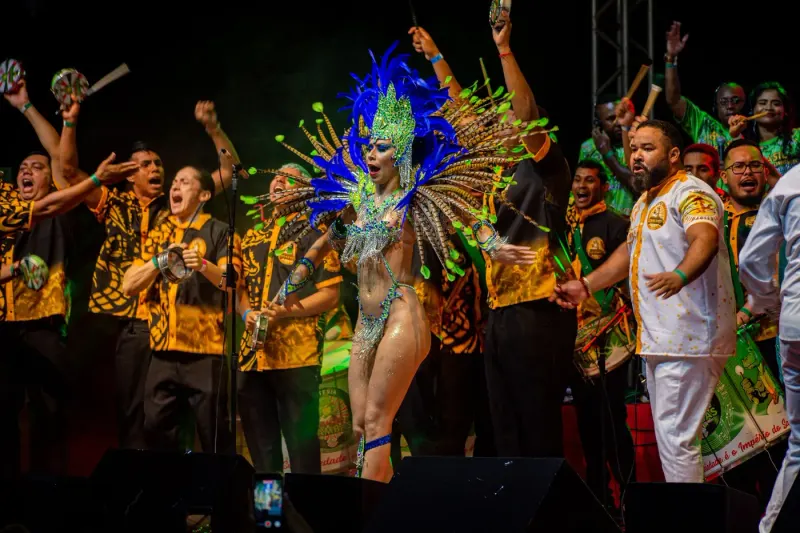
In 1928, in Rio, the first samba school was founded. Unlike the blocos and the street parties, the members of the school taught the population and spread the samba. Every year, the schools' dancers visit other neighborhoods in the city to help the popularity of samba and the Carnival grow. In 1932 the first competition between the samba schools was held, which is what we know today as the champions' parade.
The samba competition is a league, just like our football league, only here it moves far more money. These days the Carnival moves close to R$6 billion through the city of Rio alone and generates tens of thousands of temporary jobs, from seamstresses and welders to bar staff and security. The public money side is just as big: the city, the state and the federal government together channel well over R$120 million a year into the samba schools, and each Special Group school still has to raise millions more of its own to put a parade on the avenue, before you even count salaries and services. For those in a hurry, this is what a whole evening of competition looks like in 5 minutes.
It is a bit absurd, when you think of the poor cheering for an event that costs so much at their expense, instead of health, education, hygiene and everything else that is lacking, but somehow, it works! Beyond that, the Carnival has become almost a religion for quite a few people, and therefore attracts millions of tourists to Brazil every year.
If you really want to dive deeper and understand a bit of Portuguese, these are the websites of the different leagues: the samba league of Rio de Janeiro, the samba league of Floripa, the samba league of Sao Paulo.
A Bit About Samba
So we understood that Brazilians are mostly hard-pressed people, a nation oppressed for hundreds of years by its rulers, who tell the world that Brazil's problem is the people. But let us dive a little deeper and explain briefly.
Remember Robin Hood? The nobility screwing the hungry people while they celebrate at the expense of the taxes. That is what has been happening in Brazil for more than 500 years. The question arises: so many years of corruption and no one opens their mouth?
Ahhh!!! This is where samba comes in. If you read the lyrics of the songs of the big samba groups, you will discover many words of protest about the injustice and inequality that have existed in Brazil for hundreds of years.
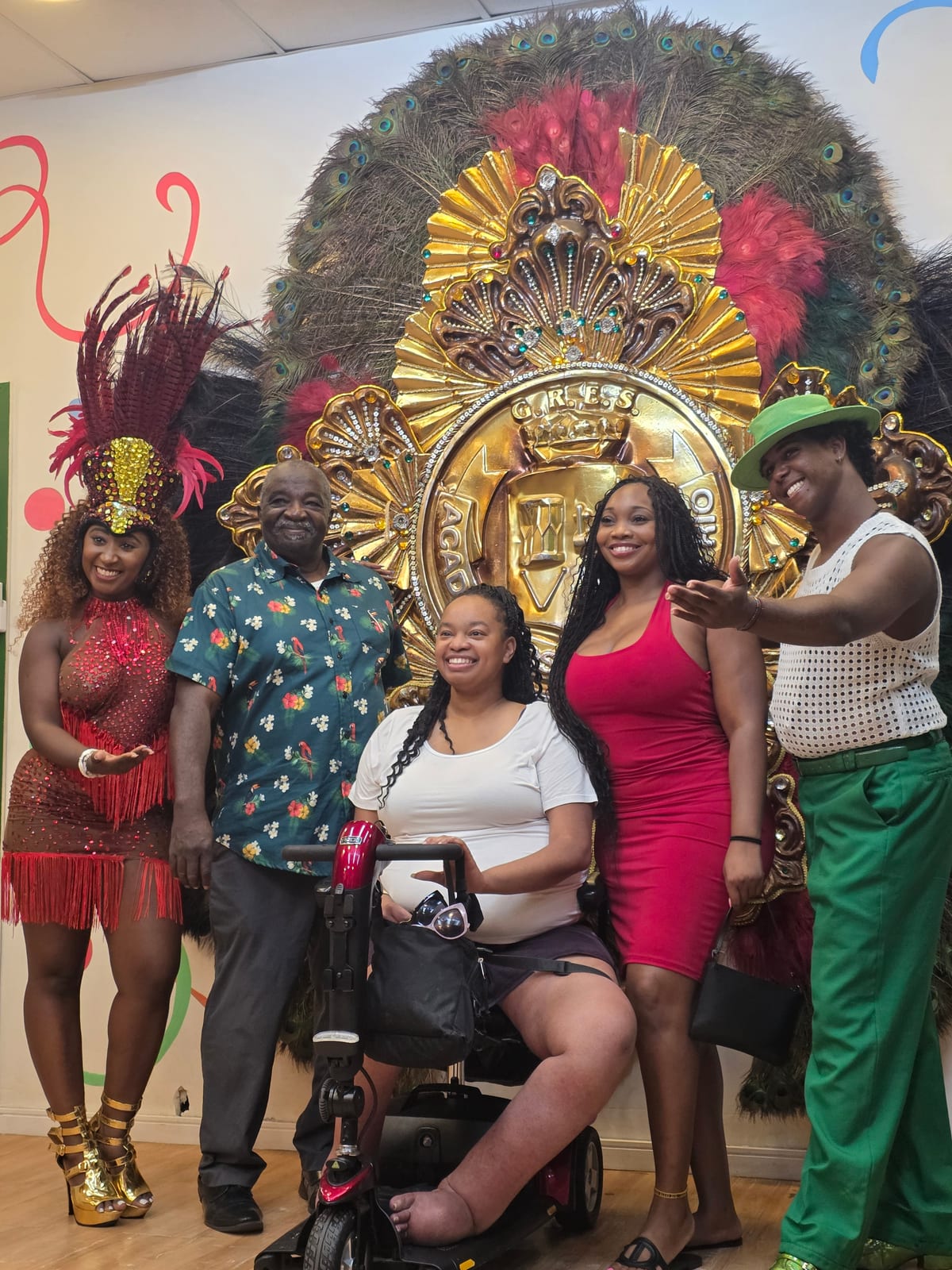
To get to know the story that thousands of people sing before hundreds of thousands of spectators all night long in the Carnival competition, we recommend searching for the songs online and translating them easily. The samba schools' lyrics are called Samba enredo. Every school picks a theme and releases its samba enredo in the months before Carnival, so whichever year you come, the songs are out and easy to find on YouTube and on the streaming services. Search for the school's name plus samba enredo and the year. If you learn two or three of them before you fly and you are here on the night, you will feel completely different from someone sitting in the stands without singing along, who has no idea what any of it is about.
The Israeli Wave
After understanding in general what the Carnival is and the importance of this event for the Brazilian people, let us focus on the Israeli traveler facing this tremendous experience.
The vast majority of Israeli travelers celebrate the Carnival mainly in Florianopolis, Salvador and Rio. Of course, where there are the most Israelis is not necessarily where the best Carnival is, but there is a strong magnet to the movement of the wave.
The magnet moves around every few years. It used to sit firmly on Rio, then it shifted to Salvador, and more recently Floripa has pulled a big share of the Israeli crowd. There is also a small but steady stream toward the Carnival in Olinda and Recife, which is considered the most authentic of them all. Ask us on WhatsApp before you book, we will tell you where the wave is heading in your year.
Personally, I have celebrated Carnival in all these places, and maybe what is best for me is not best for you, and what was best for me 15 years ago is no longer best for me now. So my goal is not to tell you where the best place is, but to give you details. As they say, I will give you a fishing rod instead of a fish. There is already lots of information online about the places where Israelis gather during Carnival, so I will focus on information that is not published elsewhere.
Carnival everywhere represents the local culture, so there are many differences from place to place, such as the type of music, the dances, the costumes, and even the style of street parties changes from city to city.
What Are Blocos?
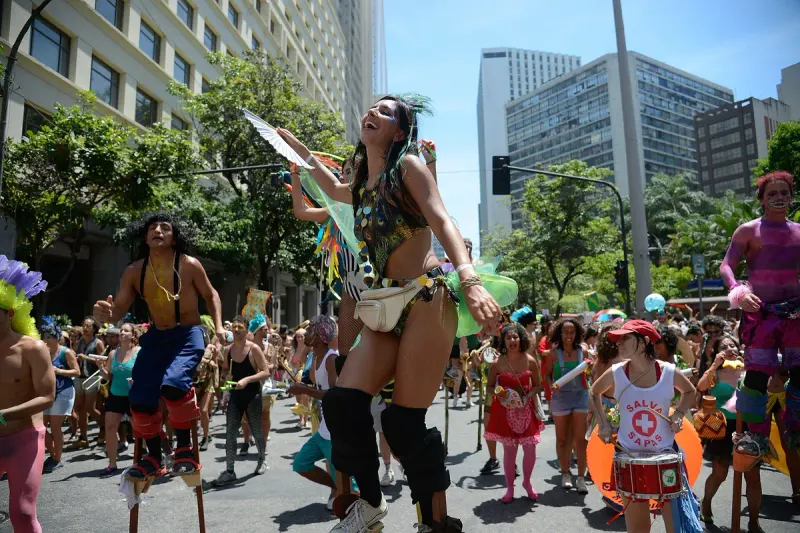
The street Carnival in the big cities centers on the street parties, the Blocos. The blocos are orchestras with dozens of musicians in different styles, performing on giant trucks that drive slowly with a devoted crowd following them, and on giant stages before hundreds of thousands of people. Each such bloco gives between 2 and 3 performances during the entire Carnival, usually in the same location. This creates street parties in the cities 24 hours a day throughout the whole Carnival and all over the city. In Rio de Janeiro the city authorizes something in the order of 450 to 500 official bloco parades in a season, spread over roughly two weeks and drawing millions of people between them. Each such bloco can have a different music style and a completely different crowd. In Rio, for example, there are blocos for babies and children that attract mostly families, one for fans of the singer Chico Buarque whose target audience is mainly women, and more.
In the past the music style in the blocos was mainly samba, but today you can hear dozens of different styles. In Rio there is even a bloco that plays only Beatles songs. The best known bloco in Salvador, for example, is OLODUM, which filmed a music video with Michael Jackson in Rio and Salvador.
My favorite bloco, Ceu na Terra, in the beautiful Santa Teresa neighborhood, starts performing at 7 in the morning on Carnival days.
In Rio and Salvador there are hundreds of different blocos playing in the city during Carnival; in Floripa, by contrast, there are only a few dozen. In the streets of Rio rehearsals take place every weekend in different locations, and they start months ahead of Carnival itself. If you are interested in seeing a live rehearsal of one of the blocos, talk to us on WhatsApp at +55 21 98689-5321 and we will happily update you about all the great events in Rio.
All in all, we are talking about hundreds of street parties in every big city. We recommend planning in advance which parties interest you most and which are in the music styles you love. That way you will actually plan the Carnival that suits you best. Online you can find the list of blocos in each city.
How You Can Take Part in the Carnival
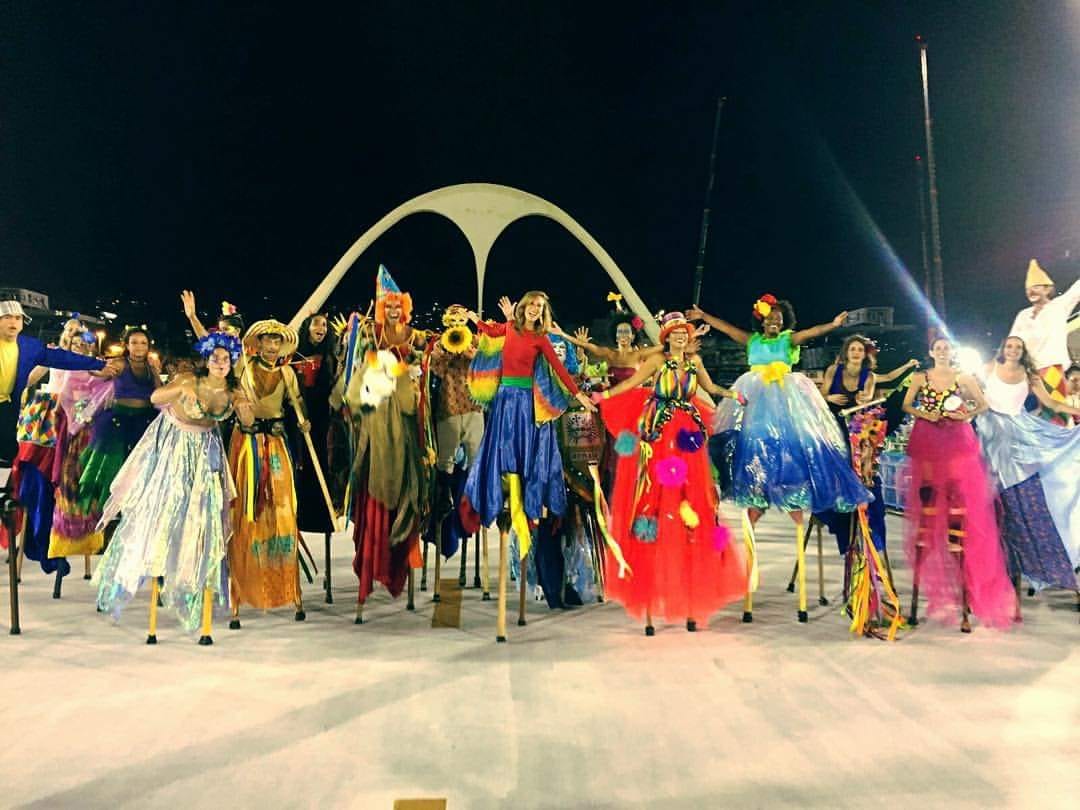
Competitive Carnival: every school that performs on the avenue of the Sambadrome is made up of classes or groups of 100 to 150 people. The participants, dancers, musicians and technical staff, meet 3 to 4 months before the Carnival, 3 times a week, and take part in rehearsals to arrive at the parade as ready as possible. Remember that representing a samba school is a dream for them, and they will do a lot to bring honor to the community and win the competition.
Here, anyone can step onto the field. If you can come to the rehearsals, you will get to participate if you put in enough effort. By the way, there are also commercial wings that anyone can join by buying the costume, the fantasia. What you pay depends entirely on the school, the wing and how elaborate the costume is: the cheapest wings of the smaller schools start at a few hundred R$, the big Special Group names run well into four figures, and agencies that resell to tourists add their own margin on top. The costume is yours to keep afterwards. Schools publish what they have available on their websites and Instagram from around October, so that is when to start looking. Write to us and we will help you find a wing that fits your budget. Being inside the parade instead of watching it is a completely different experience, highly recommended.
Street Carnival: to join the thousands of dancers there is no special method; it pulls you in on its own if you enjoy it. To get the most out of it, use the city's official street-Carnival tools. Riotur puts out a free app every year, called Blocos do Rio with the year attached, and the same listings live on the official site carnavalderua.rio. Both work by geolocation, show you the full route of each bloco, and let you search by name, by date or simply by what is happening near you right now. That is how you plan your own Carnival instead of chasing whatever the crowd is chasing.
Carnival in Rio de Janeiro
The biggest blocos in Rio, the megablocos, draw hundreds of thousands of people each. Cordao da Bola Preta, the grandfather of them all, gathers something like 700,000 on the Saturday morning of Carnival in the city centre, around hundreds of musicians playing without amplification. It is a crazy Carnival orchestra, and only the Carnival fanatics make it to the first row, closest to the musicians. Around them are security guards with a rope, and it is forbidden to cross it.
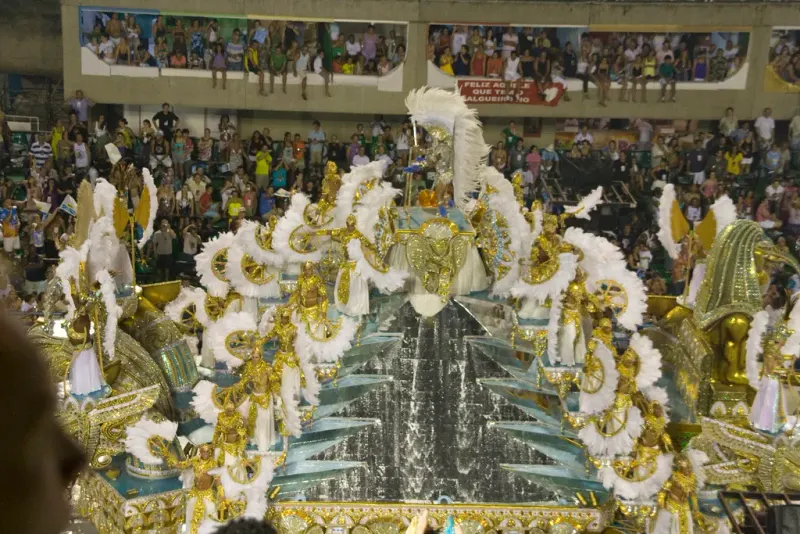
What most distinguishes Rio Carnival-wise is the size of the competitive Carnival. Every evening the parade starts around 21:00 and ends between 5 and 6 in the morning. On average, 25 to 30 thousand dancers, musicians, acrobats and so on pass through the avenue. The structure of the competition has grown: the second division, the Serie Ouro, takes the Friday and Saturday nights, and the top division, the Grupo Especial, now spreads its twelve schools over three nights, Sunday, Monday and Tuesday, four schools a night. The champions come back the following Saturday for the parade of champions. Tickets for the top-division nights cost more than the rest, and the champions' parade is its own ticket again.
For 2027 that means the Serie Ouro on February 5 and 6, the Grupo Especial on February 7, 8 and 9, and the parade of champions on February 13. Tickets go on sale many months in advance and the good sectors sell out, so if the Sambadrome is the reason you are coming, plan early and talk to us before you buy.
In Rio, the parade show is the biggest, biggest, biggest in the world. It cannot be compared to anything else, and the experience and euphoria are something hard to explain in words.
Carnival in Florianopolis
Known as Floripa, here you will hear mainly pop and electronic music. You can also hear Brazilian music in the streets, like MPB and Brazilian funk, which is a bit like Todo Bom by Static and Ben El. You will hardly hear samba and Axe, which are the two main music styles of Rio (samba) and Salvador (Axe).
There is a parade of the various samba groups, and you can also find street parties in different music styles. In addition, Floripa has a wide range of parties, like pool parties from noon until the late hours of the night. In Floripa it is customary among Israelis to rent huge villas for ten to twenty people for the duration of the Carnival. That way you will have privacy and pool parties throughout the whole Carnival.

Salvador and Olinda
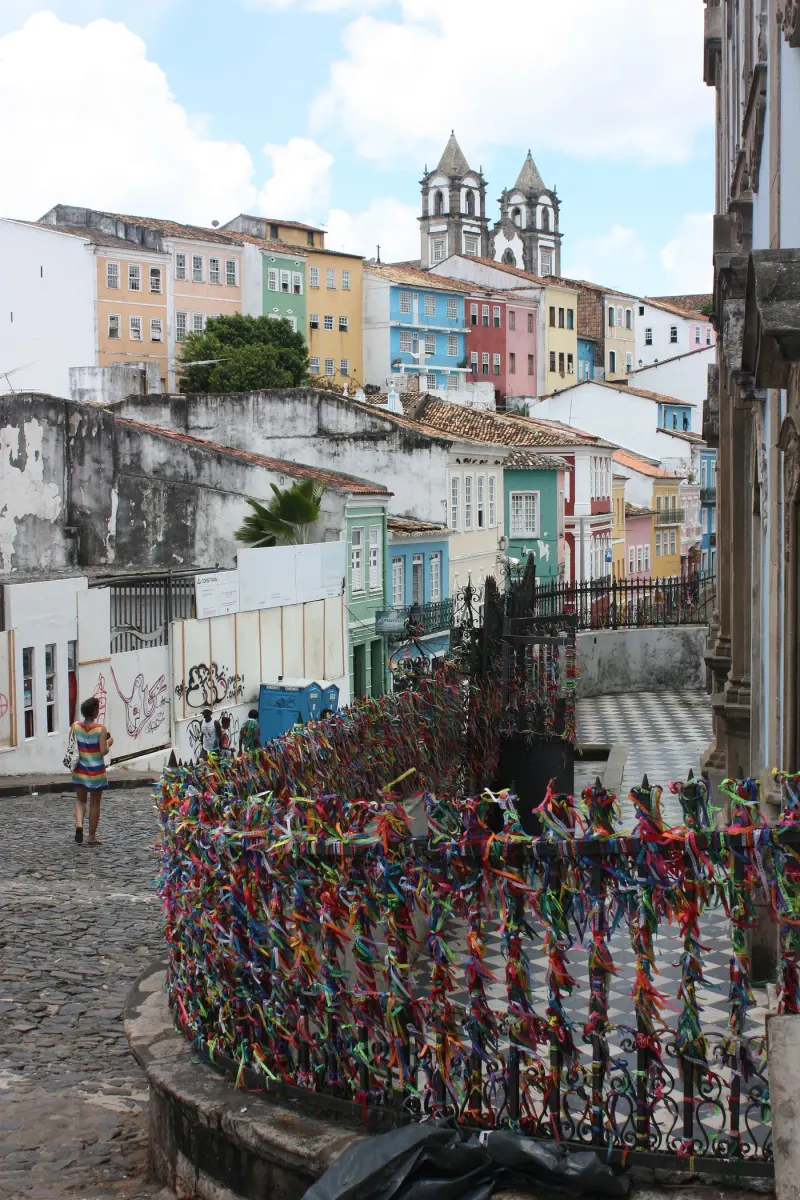
Salvador's street parties are celebrated around trucks with giant speakers topped by a stage. On that stage are the stars of the show. There are different areas with massive parties and smaller ones. The strongest style in the authentic street parties is the African one, because that is what makes Salvador and the state of Bahia in general unique; you will feel Africa strongly there (also in terms of dress, food and the overall culture).
In Olinda the music is more in the style of maracatu and frevo, styles you will not hear in the other cities. There are also giant puppets accompanying the parades, and there are blocos there too, but it is much calmer and smaller. The types of costumes and makeup are different, and there are local dances you will only see there, mainly the frevo.
In Summary
The Carnival is an amazing experience through which you can get to know Brazilian culture better, or simply celebrate and enjoy life. But it is important to us that you know what you are getting into. Research beforehand, ask around, check who is recommending or telling you where the best Carnival is (it may be that they have only ever been to one Carnival). Only then decide where you will spend the Carnival, according to what is best and most suitable for you.
One last practical word. Carnival prices, parade dates, costume costs and ticket sectors change every single year, and so does the line-up of blocos. Nothing written here replaces a live answer. Rio Trip is an Israeli tour agency in Rio de Janeiro, with more than 23 years in tourism, guiding travelers in Rio. We run day trips in the city and the surrounding area and also organize tours for private groups according to the client's requests. We would be happy to help and share more information with you about the Carnival and about Rio de Janeiro, answer questions and talk things through. Contact us: WhatsApp +55 21 98689-5321, www.riodaytrip.com.